Communication infrastructure
School communication infrastructure for district-wide calling
Treat phones as infrastructure, with hosted calling, network readiness, emergency planning, and central administration across the district.
Quick answer
School communication infrastructure is the network and platform that carry district-wide calling. It includes hosted VoIP, a sound underlying network, emergency calling planning, and central administration, designed and supported like the rest of district infrastructure.
The situation
Why phones belong in your infrastructure plan
Phones are often the last system to get the planning that the rest of the network already has.
Treated as an afterthought
The phone system is often older and less planned than the network.
Network dependency
VoIP rides on the network, so the network has to be ready.
Safety dependency
Emergency calling depends on infrastructure being designed correctly.
Central management
Infrastructure should be administered centrally, not per building.
Requirements
What communication infrastructure needs
The system should be planned with the same care as the network.
- Hosted VoIP platform
- Network readiness and switching review
- Power and continuity planning
- Emergency calling and location data
- Central administration
- Monitoring and support
- Number porting coordination
- Documentation for the district
Recommended approach
Planning communication infrastructure
The plan treats phones as part of district infrastructure.
-
Review the network
Assess switching, bandwidth, and power for voice.
-
Design the platform
Build hosted calling, routing, and emergency location data.
-
Plan support
Define monitoring and a clear support path.
-
Deploy and document
Roll out by site and document the infrastructure.
Across every building
Communication infrastructure across every building
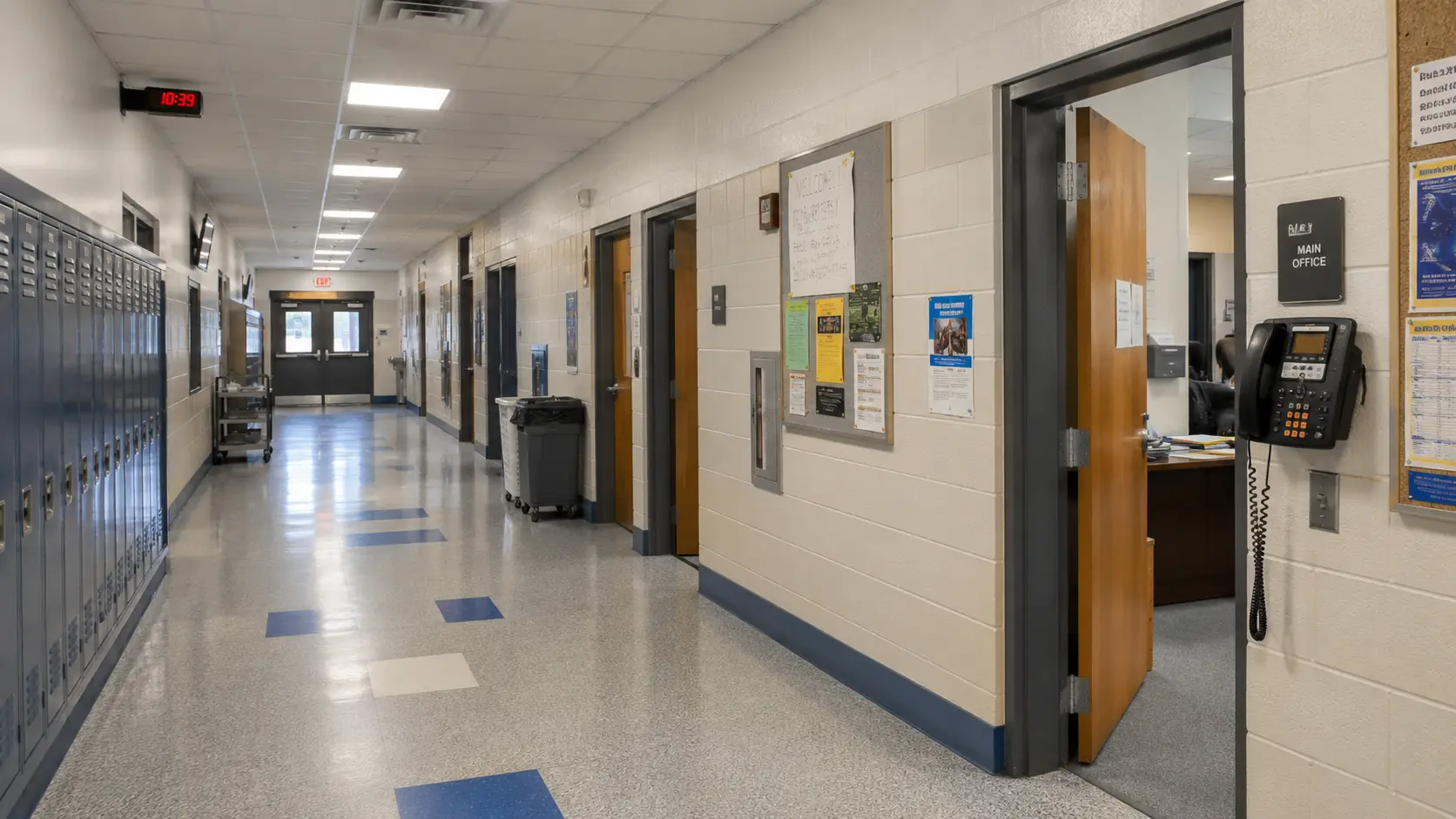
A school phone system has to support more than the front office. It has to work across hallways, classrooms, administrative spaces, shared offices, and district buildings.
- Consistent dial plan across campuses
- Routing between buildings and the district office
- Per-building emergency location data
Working on emergency calling? See School 911 Compliance Planning for how Kari's Law and RAY BAUM'S Act requirements factor into a district phone system replacement.
Related capabilities
Related pages for district phone planning
K-12 VoIP
Hosted VoIP phone systems built for districts.
Learn more about K-12 VoIPMulti-campus routing
Administer every campus from one platform.
Learn more about Multi-campus routingEmergency communication
Plan direct 911 dialing, notification, and location data.
Learn more about Emergency communicationAll phone system solutions
See every K-12 phone system solution in one place.
Learn more about All phone system solutionsQuestions
Frequently asked questions
Straightforward answers for district technology and operations leaders evaluating a phone system replacement.
Why treat phones as infrastructure?
Because emergency calling and daily operations depend on the system. Planning it like infrastructure reduces risk and surprises.
Does the network need work first?
Sometimes. A network readiness review identifies switching, bandwidth, and power needs before deployment.
Is the system administered centrally?
Yes. A hosted platform administers calling across the district from one place.
Is emergency calling part of the infrastructure plan?
Yes. Direct 911 dialing, notification, and location data are planned as part of the design.
What documentation do we get?
Documentation covers the design, dial plan, and emergency location data so the district has a clear record.
Start with a review of your current phone system
We will look at your current setup, call flow, locations, numbers, and replacement risks so your district can plan the next step with clarity.
Questions before you request a review? Call 908-923-8241.