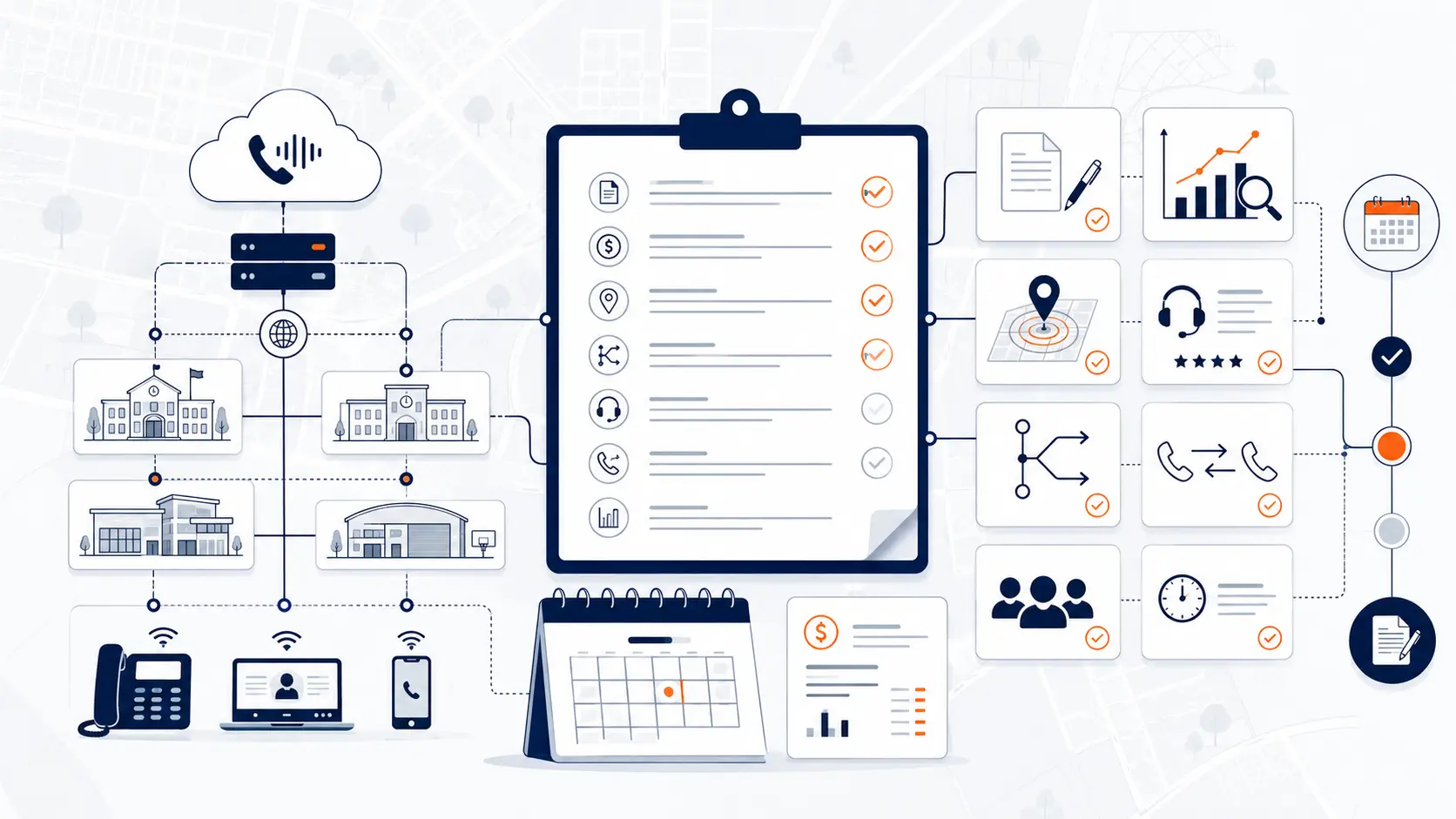
A hosted VoIP phone system can be a good fit for a school district, but the renewal date is the wrong time to assume the current installation is still right. Many districts already moved away from an old PBX and still have a system that costs too much, routes calls poorly, leaves E911 questions unanswered, or charges for extensions that are rarely used.
A district VoIP renewal should not be treated as paperwork. It is a chance to review the current phone environment, the pricing model, the support history, the routing plan, the E911 setup, and the district’s next three to five years of building, staffing, and communication needs.
Request System Review | Download the District Phone System Review Checklist
Why hosted VoIP renewals deserve a real review
Many districts think the hard decision was already made when they moved from legacy PBX hardware to hosted VoIP. That can create a false sense of safety.
A hosted system can still be misaligned with how schools work. The district may be paying for too many named users, too many extensions, device rentals, extra support tiers, unused mobile app licenses, or features that never got adopted. The call routing may still reflect an old building layout. E911 location data may not match actual device placement. Porting records may be incomplete. Staff may have learned workarounds that hide the system’s weaknesses.
A renewal review should answer one question:
Is the district renewing a phone system that still fits, or renewing a contract that nobody has challenged in years?
The biggest renewal mistake: reviewing price without reviewing structure
Most districts ask, “Can we get a lower monthly price?”
That is useful, but it does not go far enough. The better question is:
What are we paying for, and does the pricing model match how a school district actually uses phones?
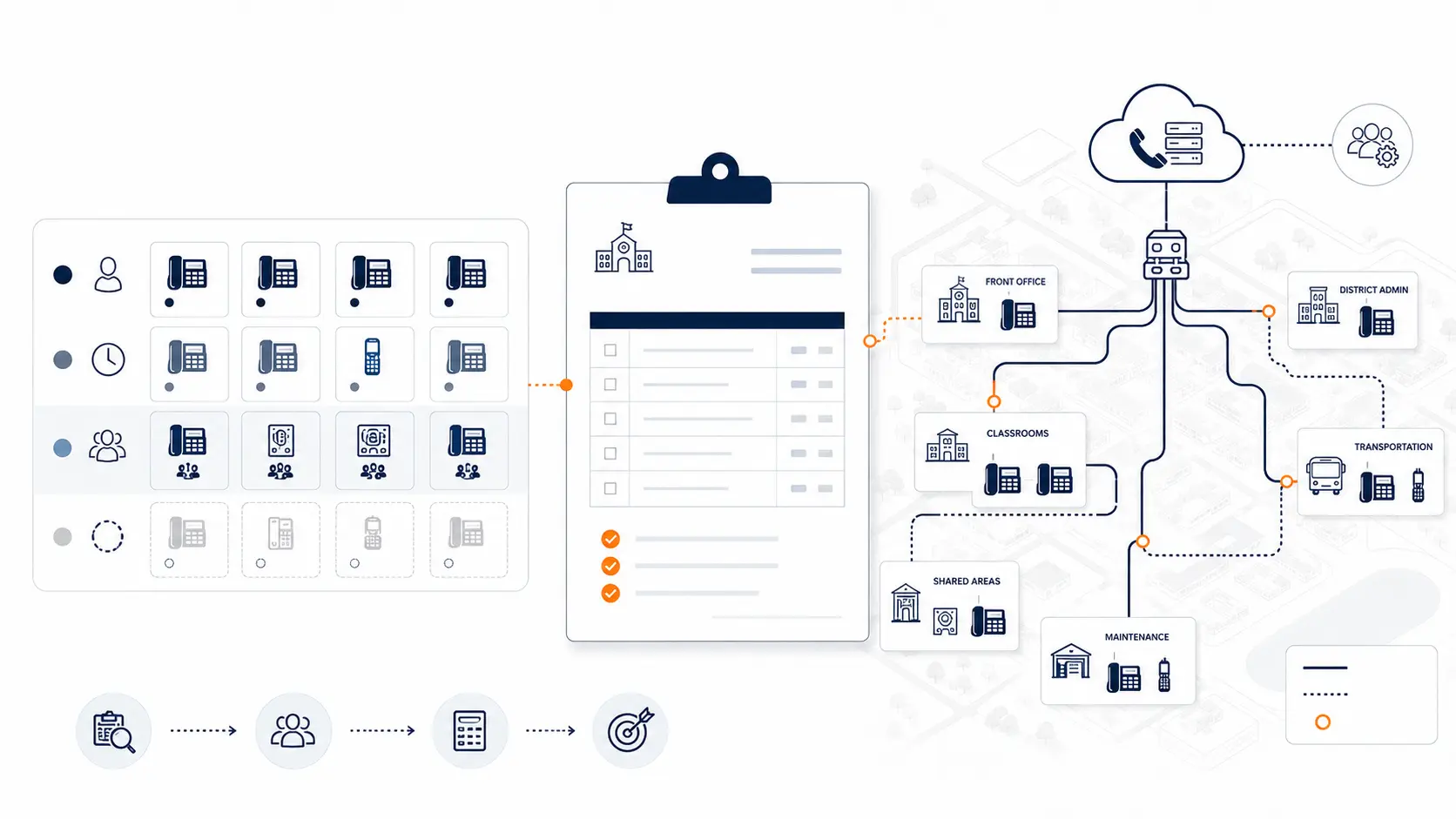
A district may have hundreds or thousands of extensions, but that does not mean every extension needs to be priced like a full active user. Front office staff, administrators, classroom phones, common area phones, transportation phones, maintenance phones, and seasonal or shared roles do not all create the same calling demand.
If the hosted VoIP provider charges by extension, the district may be paying too much.
Per-extension pricing can quietly inflate school phone costs
Per-extension pricing sounds simple. Count extensions, multiply by a monthly price, renew the contract.
The problem is that school environments often have many low-usage extensions. A classroom phone may exist for safety and reachability, not daily calling. A shared office phone may handle occasional calls. A maintenance phone may exist for routing and coverage. A seasonal user may need access only part of the year.
When every extension is billed the same way, the district can pay full price for low-activity endpoints.
| Pricing issue | Why it matters in schools | Renewal question |
|---|---|---|
| Per-extension billing | Many school phones are low-usage or shared | Are we paying full user rates for every endpoint? |
| Unused licenses | Staff roles change during the year | Which extensions have little or no activity? |
| Mobile app seats | Apps may be assigned but rarely used | Who actually needs mobile access? |
| Device rental fees | Leased phones can outlive their value | Are we still paying monthly for old devices? |
| Support add-ons | Support may be tiered or limited | What support did we use last year? |
| Feature bundles | Some features may not match school workflows | Which features are active and used? |
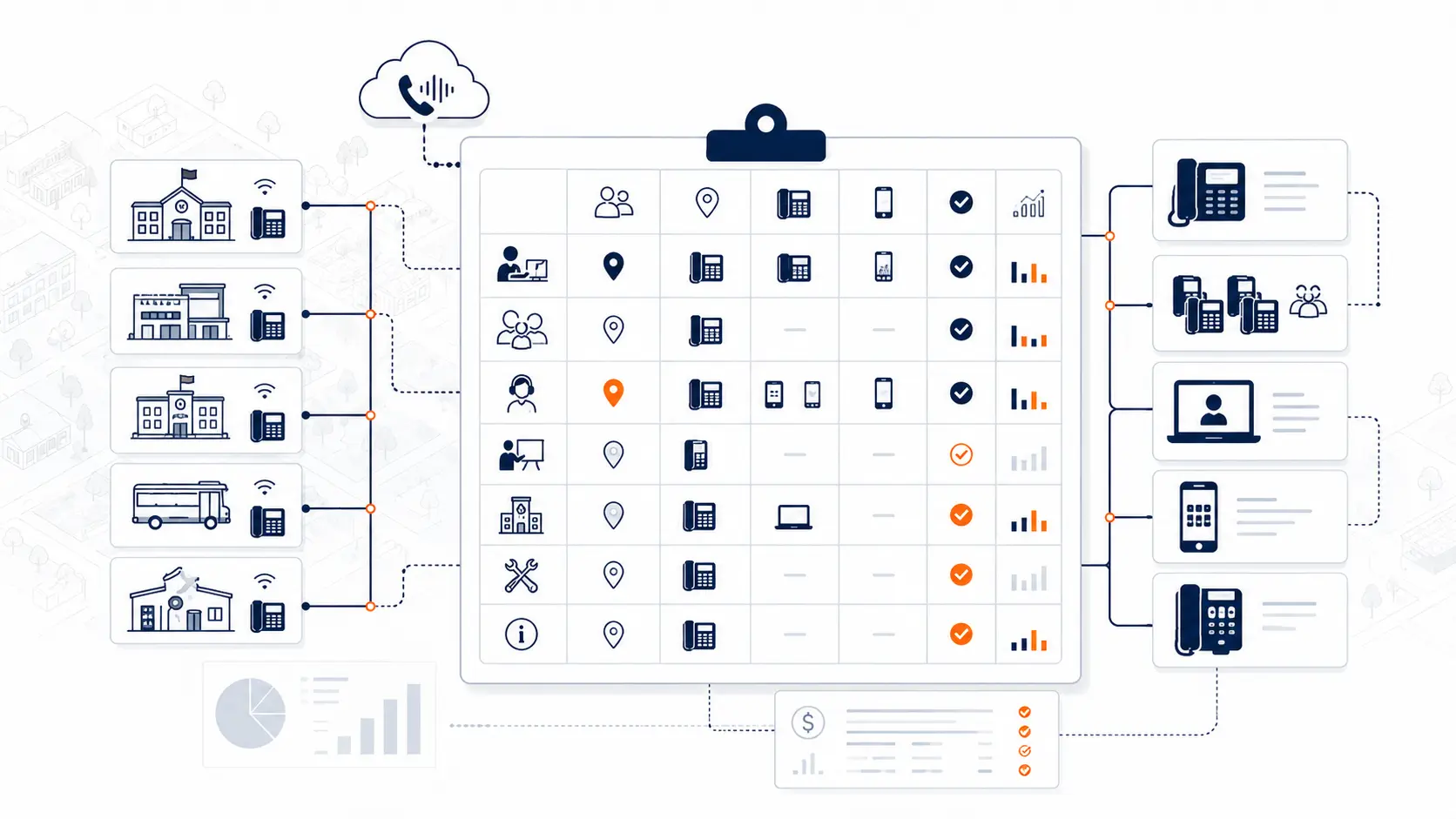
A renewal should compare the current bill against actual district usage, staff roles, building needs, and call patterns.
Hosted VoIP does not automatically mean the system is modern
A district can have a cloud phone system and still have old thinking built into the design.
Common examples include:
- Old PBX call flows copied into the hosted system
- Too many auto attendants with unclear menu options
- Campus routing that depends on manual transfers
- Main numbers that do not route cleanly after hours
- Classroom extensions billed as full users
- Softphones assigned without a clear policy
- Mobile apps deployed without E911 location planning
- Fax, alarm, elevator, or gate lines left undocumented
- Poor records for number ownership and porting
- No clear change process after staff or room moves
A hosted VoIP renewal is the right time to ask whether the system was truly designed for the district, or simply migrated from the old setup.
What districts should review before renewing hosted VoIP
A renewal review should cover more than the contract term and monthly rate.
Current contract and billing
Start with the invoice and agreement.
Review:
- Contract end date
- Renewal notice deadline
- Auto-renewal language
- Number of billed users or extensions
- Device rental or lease charges
- Support charges
- Taxes, surcharges, and recovery fees
- Fax, paging, analog, or specialty line costs
- Early termination language
- Porting language
- Price increase terms
The goal is not just to lower cost. The goal is to understand what the district is locked into and what can be changed before signing again.
Extension and user inventory
Next, compare the invoice to the real district environment.
Review:
- Active users
- Classroom phones
- Front office phones
- Department phones
- Common area phones
- Shared phones
- Softphone users
- Mobile app users
- Unused extensions
- Former staff extensions
- Seasonal or temporary users
A district should not renew based on an old extension list that has not been cleaned up.
Call routing and front office flow
Hosted VoIP can create clean routing, but only when the call flows are planned.
Review:
- Main district number routing
- Campus main number routing
- Auto attendant menus
- Front office ring groups
- Department routing
- Transportation and maintenance routing
- After-hours routing
- Holiday and closure schedules
- Overflow paths
- Voicemail ownership
- Transfer paths between campuses
School phone systems fail in practical ways. Parents cannot reach the front office. Calls transfer to a person who left the district. A campus closure message is outdated. Transportation calls go to the wrong group. These problems are not solved by VoIP alone. They are solved by reviewing the call flow.
E911 readiness
Every hosted VoIP renewal should include an E911 review.
Review:
- Direct 911 dialing
- On-site notification recipients
- Dispatchable location records
- Building, floor, room, and area mapping
- Classroom phone locations
- Shared space locations
- Portable classrooms
- Softphone and mobile app handling
- Recent room moves
- Testing process
- Ownership for future updates
The FCC describes MLTS requirements related to direct 911 dialing, notification, and dispatchable location, and 911.gov provides resources for understanding Kari’s Law and RAY BAUM’S Act requirements. Districts should confirm their legal obligations with qualified counsel and public safety authorities. This article is technical planning guidance, not legal advice. [1][2]
Use the K-12 E911 Readiness Checklist before signing a renewal.
Support history
A renewal should account for what happened during the last contract term.
Review:
- How many tickets were opened
- Response time for urgent issues
- After-hours support experience
- Cutover or outage history
- Recurring problems
- Vendor ownership of fixes
- How changes were requested
- Whether district staff can make routine changes
- Whether support was included or billed separately
If a district had routing problems, support delays, or poor ownership during the current term, a lower renewal price does not solve the real problem.
Renewal warning signs
A district should pause before renewing if any of these are true:
- The provider charges per extension and the district has many low-use phones
- The extension list has not been cleaned up in more than a year
- The system has no clear E911 location update process
- Softphones or mobile apps are active without clear policies
- Main numbers or campus numbers route through workarounds
- Support tickets repeat the same issue
- The district cannot easily explain the invoice
- Contract renewal happens automatically unless canceled early
- Porting language is unclear
- The provider owns key system knowledge that the district cannot see
These warning signs do not always mean the district must switch. They mean the system deserves review before renewal.
What to ask the current provider before renewing
Ask direct, practical questions:
- How many extensions are billed today?
- Which extensions had low or no usage during the last 90 to 180 days?
- Are classroom phones billed the same as administrative users?
- Which mobile app seats are active?
- Are we paying for device rentals or leases?
- What support is included?
- What changes cost extra?
- What E911 location records are currently on file?
- How are room moves and device moves updated?
- Can we export our extension list, number list, and call flow records?
- What happens if we decide to port numbers away?
- What renewal deadline applies?
- What price increase terms apply after renewal?
A strong provider should be able to answer without making the district feel like it is asking the wrong questions.
What a better hosted VoIP review should produce
A real review should give the district more than a quote.
It should produce:
- A cleaned-up extension and user picture
- A review of billed seats, phones, and app licenses
- A list of numbers and routing paths
- A summary of E911 review areas
- A review of softphone and mobile app usage
- A list of analog or specialty services to verify
- A support and contract risk summary
- A renewal or replacement recommendation
- A phased migration path if the current system no longer fits
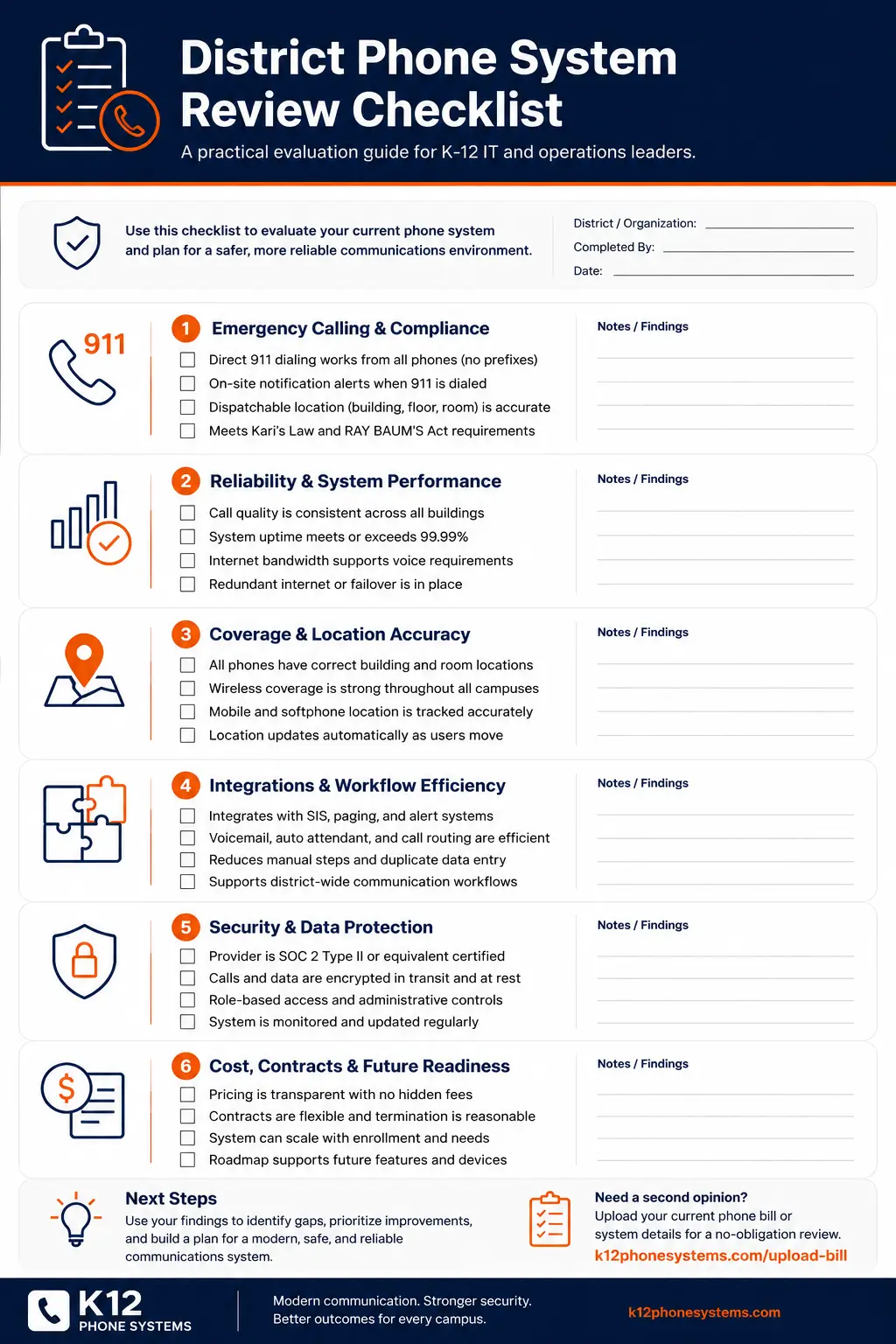
The District Phone System Review Checklist can help organize these review areas before the renewal date.
When to renew and when to replace
A district may choose to renew when the system is working, pricing is fair, E911 records are maintained, support is responsive, and the contract terms are clear.
A district should consider replacement when the system is expensive, hard to administer, poorly supported, unclear on E911 records, built around per-extension pricing that does not match usage, or tied to a contract that limits flexibility.
| Situation | Renew may make sense | Replacement review may make sense |
|---|---|---|
| Pricing | Matches real usage | High per-extension cost |
| E911 records | Current and maintained | Unclear or outdated |
| Routing | Clean and documented | Workarounds and transfer loops |
| Support | Responsive and clear | Slow or recurring issues |
| Contract | Clear renewal terms | Auto-renewal or lock-in concern |
| Admin control | District can make routine changes | Vendor must handle basic edits |
| Mobile use | Clear policy | Apps assigned without review |
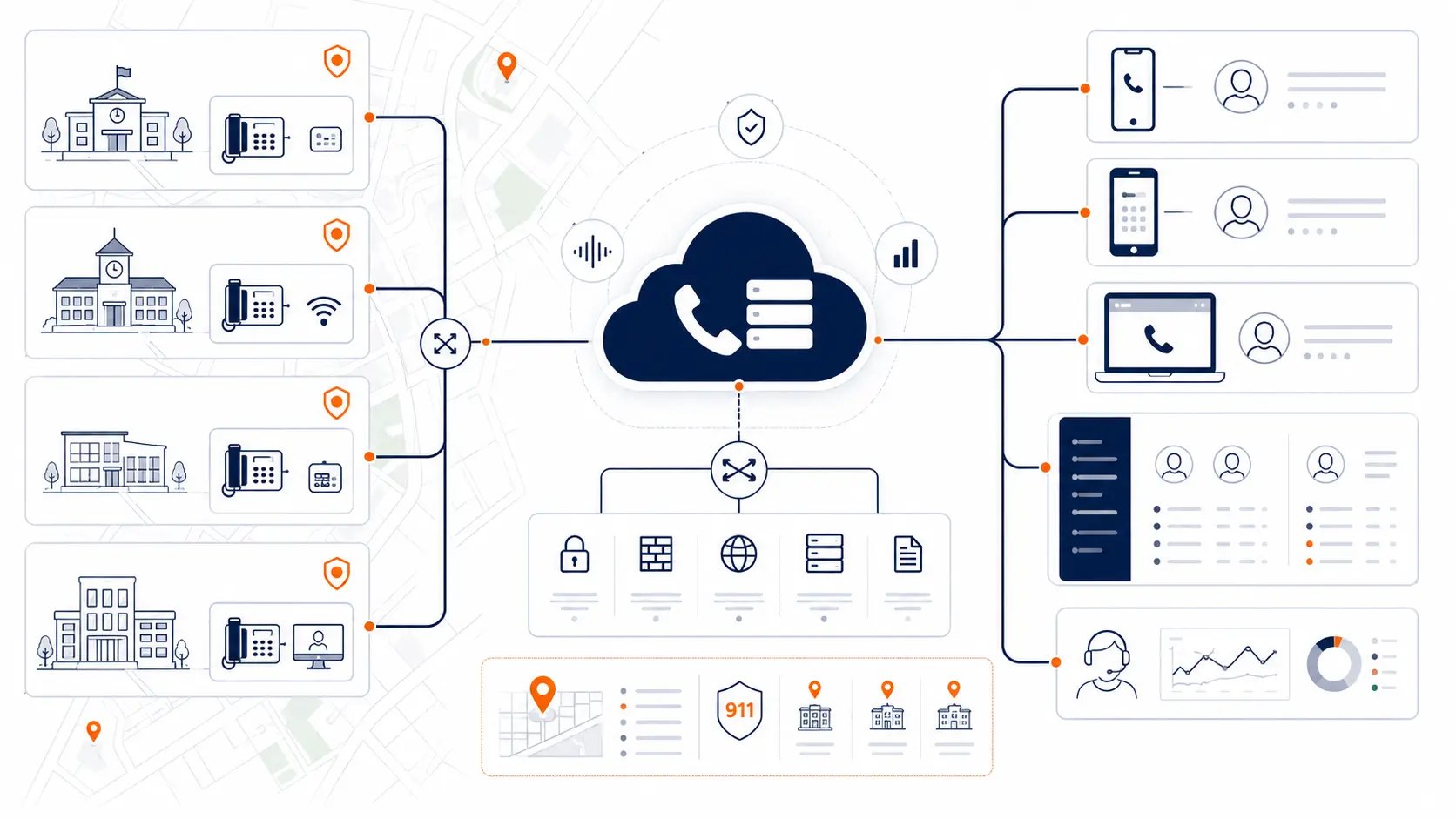
For districts comparing hosted options, review K-12 VoIP Phone Systems and Cloud Phone Systems for Schools.
How K12 Phone Systems reviews hosted VoIP renewals
K12 Phone Systems can review an existing hosted VoIP setup before the district renews or replaces it.
A review may include:
- Current invoice and contract structure
- Per-extension or per-user pricing review
- Extension and user inventory
- Main number and campus routing
- Front office call flows
- E911 planning areas
- Softphone and mobile app usage
- Analog and specialty line concerns
- Number porting considerations
- Support and renewal risk
- Practical next steps
Start with what you have. A phone bill, contract, extension export, vendor proposal, or short written summary is enough to begin.
Related planning resources
- District Phone System Review Checklist
- District Phone System Modernization Roadmap
- K-12 E911 Readiness Checklist
- School Phone Systems
- PBX Replacement for Schools
Frequently asked questions
Should school districts review hosted VoIP before renewal?
Yes. A renewal is the right time to review pricing, extension counts, call routing, E911 records, support history, contract terms, and whether the system still fits the district.
Is per-extension VoIP pricing bad for schools?
Not always, but it can be expensive when a district has many low-use classroom phones, shared phones, common area phones, or seasonal users. The district should compare billed extensions against actual usage and staff roles.
Can a district keep its hosted VoIP provider but change the pricing model?
Sometimes. That depends on the provider, contract terms, renewal timing, and willingness to restructure the account. The district should ask before signing a renewal.
Does hosted VoIP automatically solve E911 problems?
No. Hosted systems still need accurate location records, device assignments, on-site notification planning, softphone and mobile app policies, and testing. Districts should review these items before renewal.
What should we send before a renewal review?
Send the current invoice, contract, extension list, number list, call flow notes, E911 concerns, and any support issues from the last year. A complete inventory helps, but it is not required to start.
Should we replace our hosted VoIP system or renegotiate it?
A district should compare pricing, support, E911 readiness, routing quality, admin control, and contract terms. Some systems can be corrected. Others are better replaced.
Do cloud phone systems qualify for E-Rate?
Districts should verify funding questions with their E-Rate consultant, finance team, and official program guidance. The FCC and USAC provide program information and eligible services guidance. [3][4]
References
- FCC MLTS 911 requirements
- 911.gov Kari’s Law and RAY BAUM’S Act resources
- FCC E-Rate Schools and Libraries Program
- USAC E-Rate Eligible Services Overview
Ready to review your hosted VoIP renewal?
Share your current phone bill, contract, extension list, or vendor proposal. We will help identify pricing issues, E911 review areas, routing concerns, contract risks, and practical next steps before renewal.