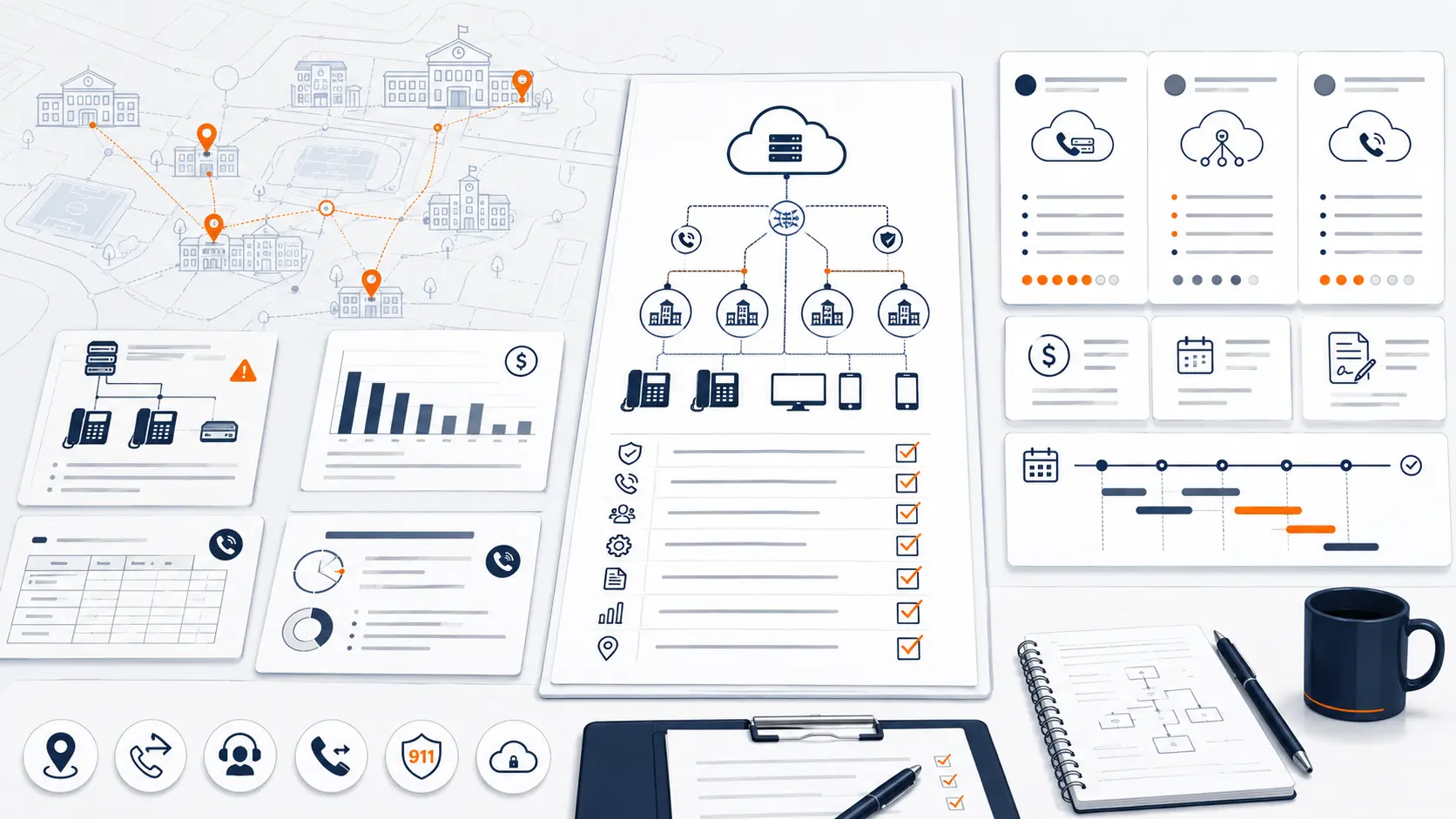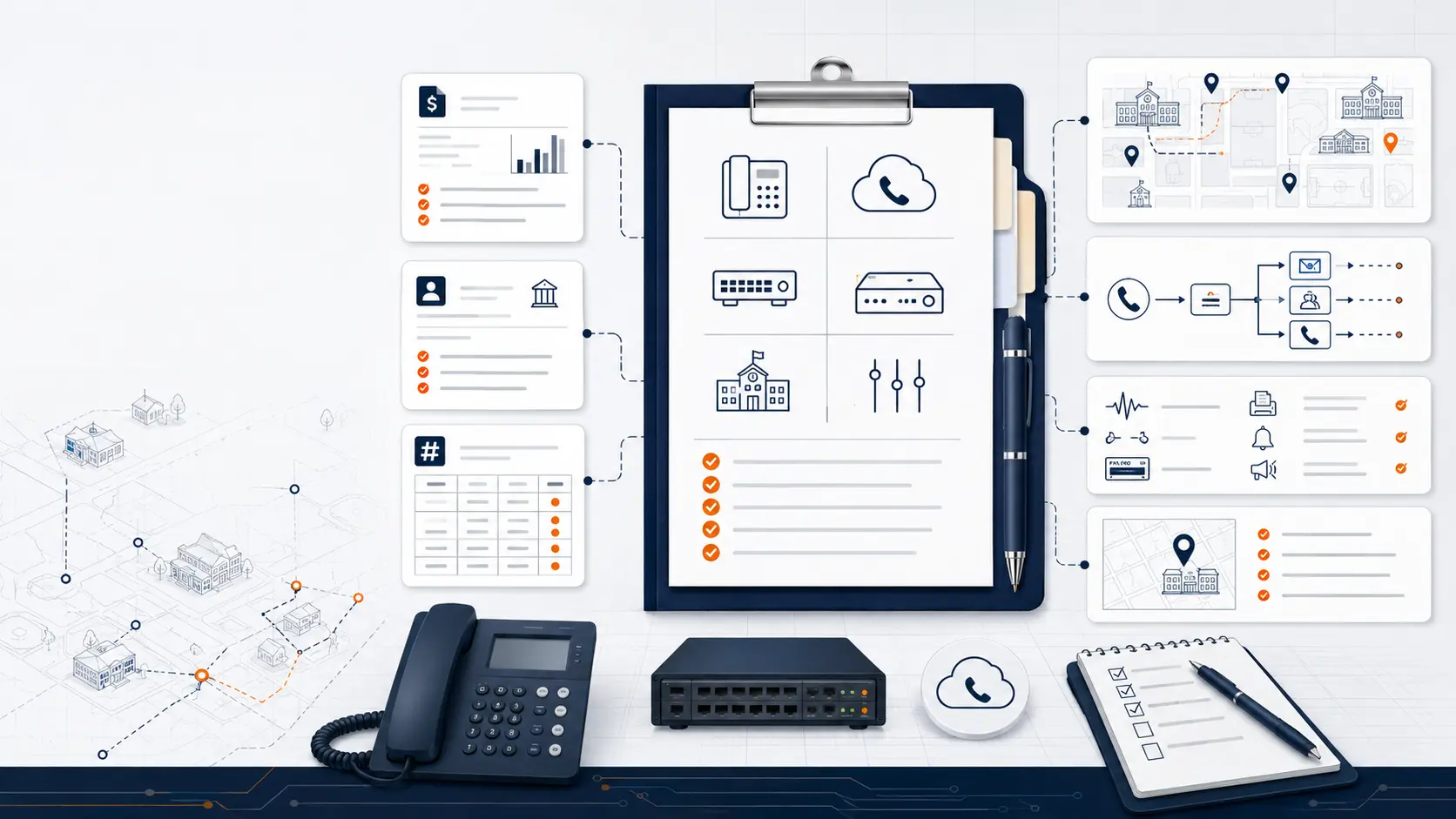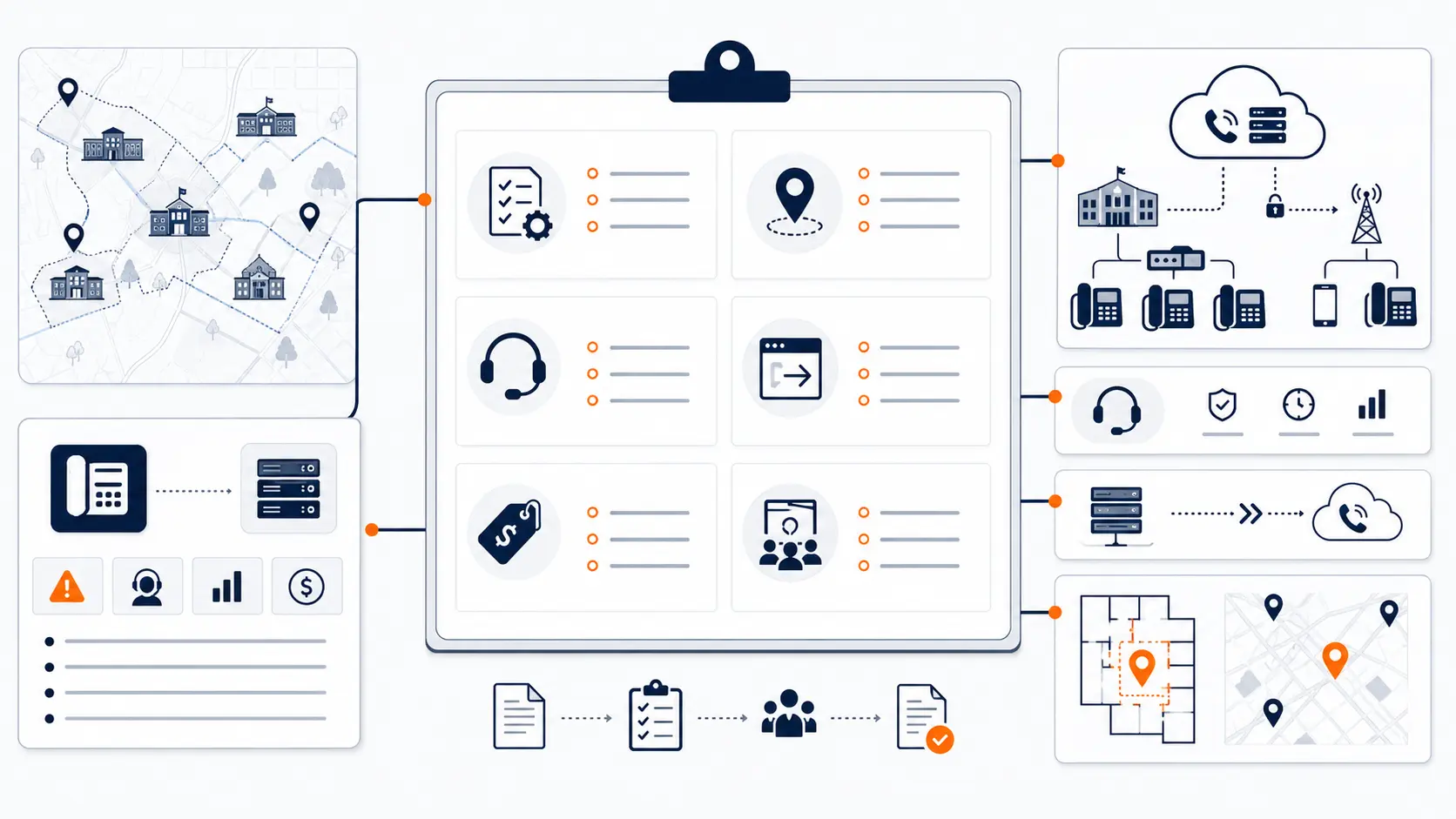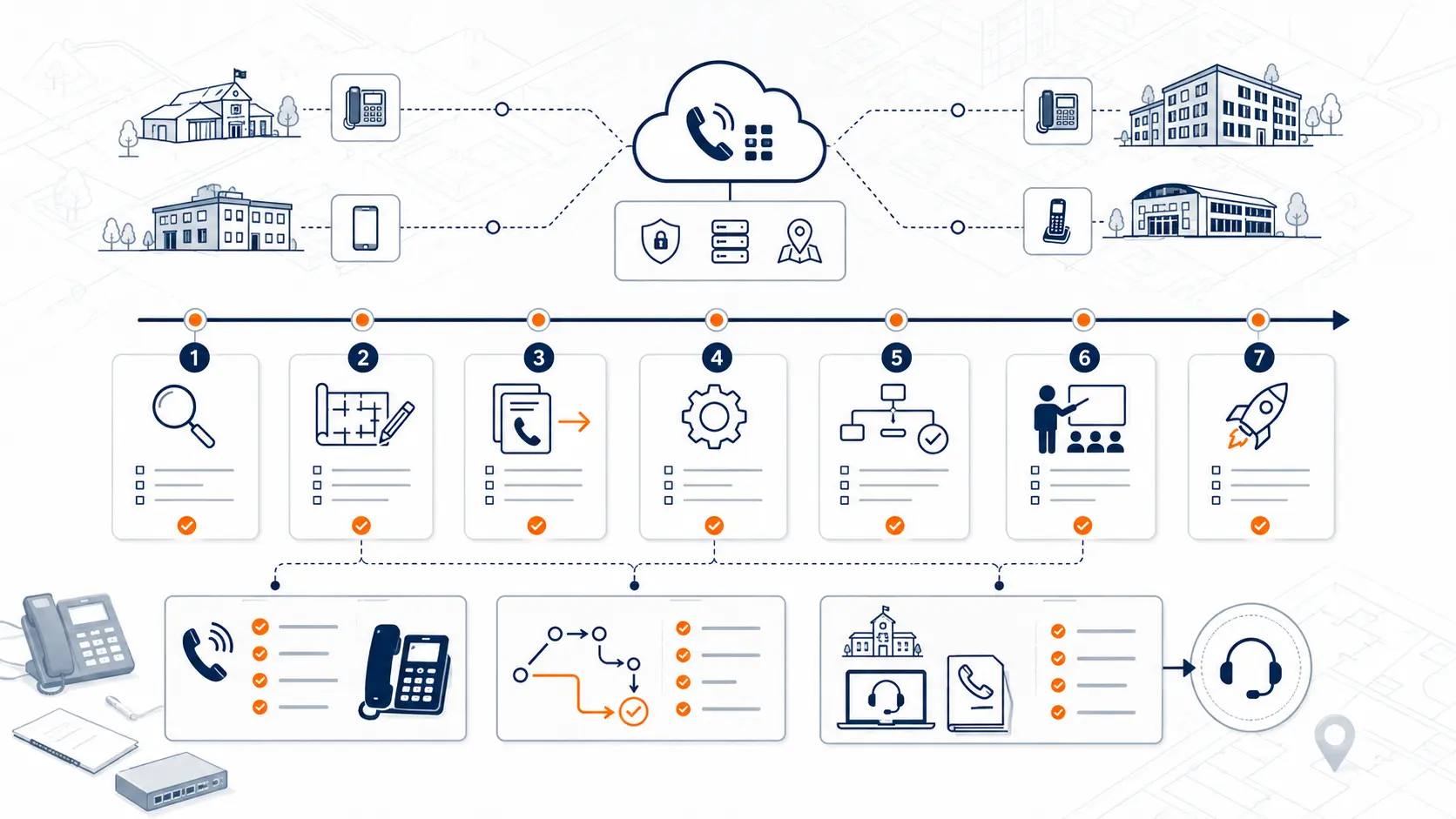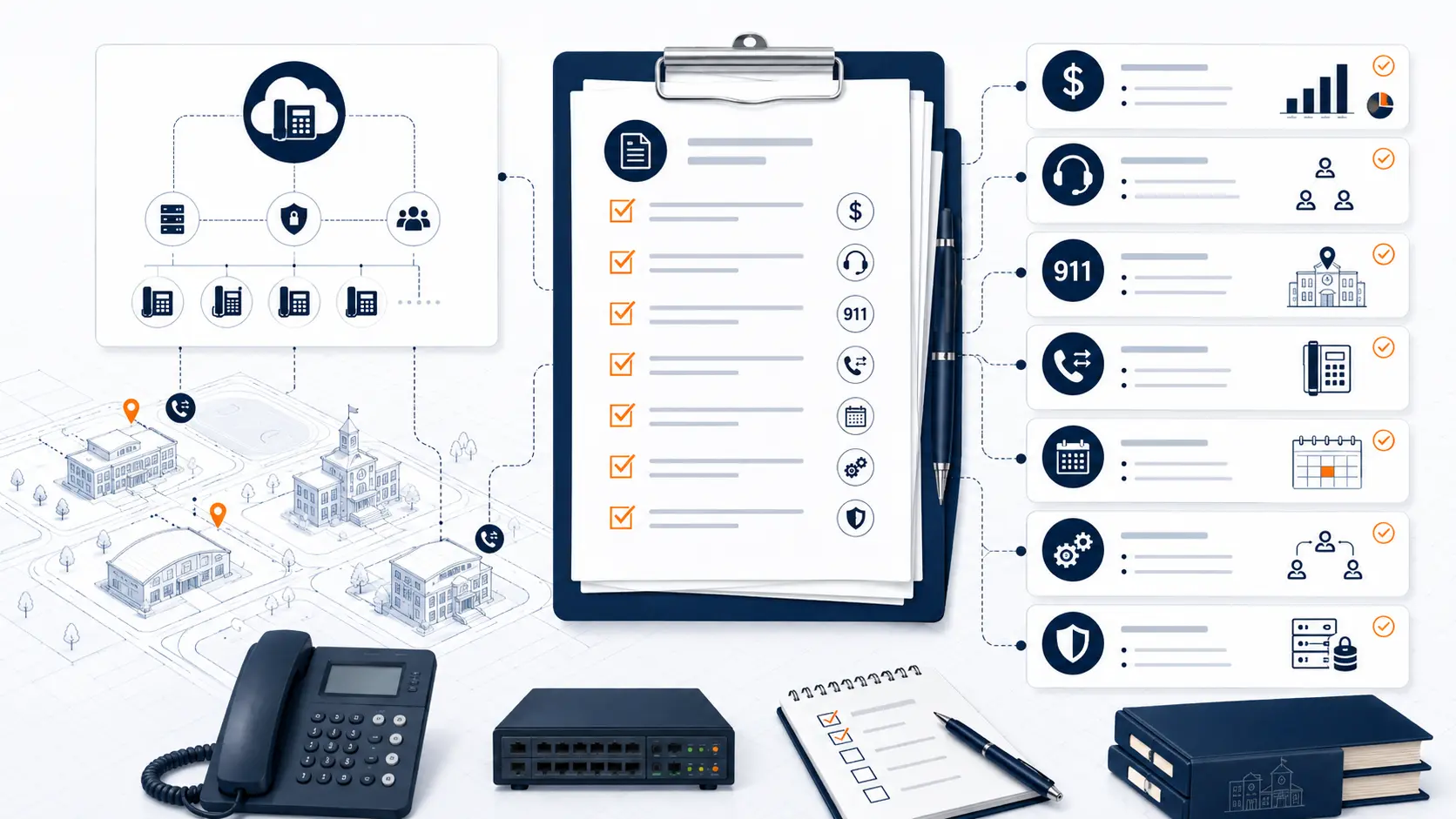
A school phone system contract should never be reviewed only as a phone quote. It affects front offices, classrooms, district administration, E911 planning, number porting, carrier services, call routing, staff access, support, and long-term cost. The safest time to question the scope is before the agreement is signed, not after the district is already committed to a migration timeline or renewal term.
For many districts, the phone system is treated as a utility until something breaks, costs rise, or a replacement project starts. The contract is where those hidden issues become real. A low monthly price may not include the support you need. A hosted VoIP proposal may still charge too much by extension. A system that looks modern may not address dispatchable location, multi-campus routing, analog lines, or cutover support clearly.
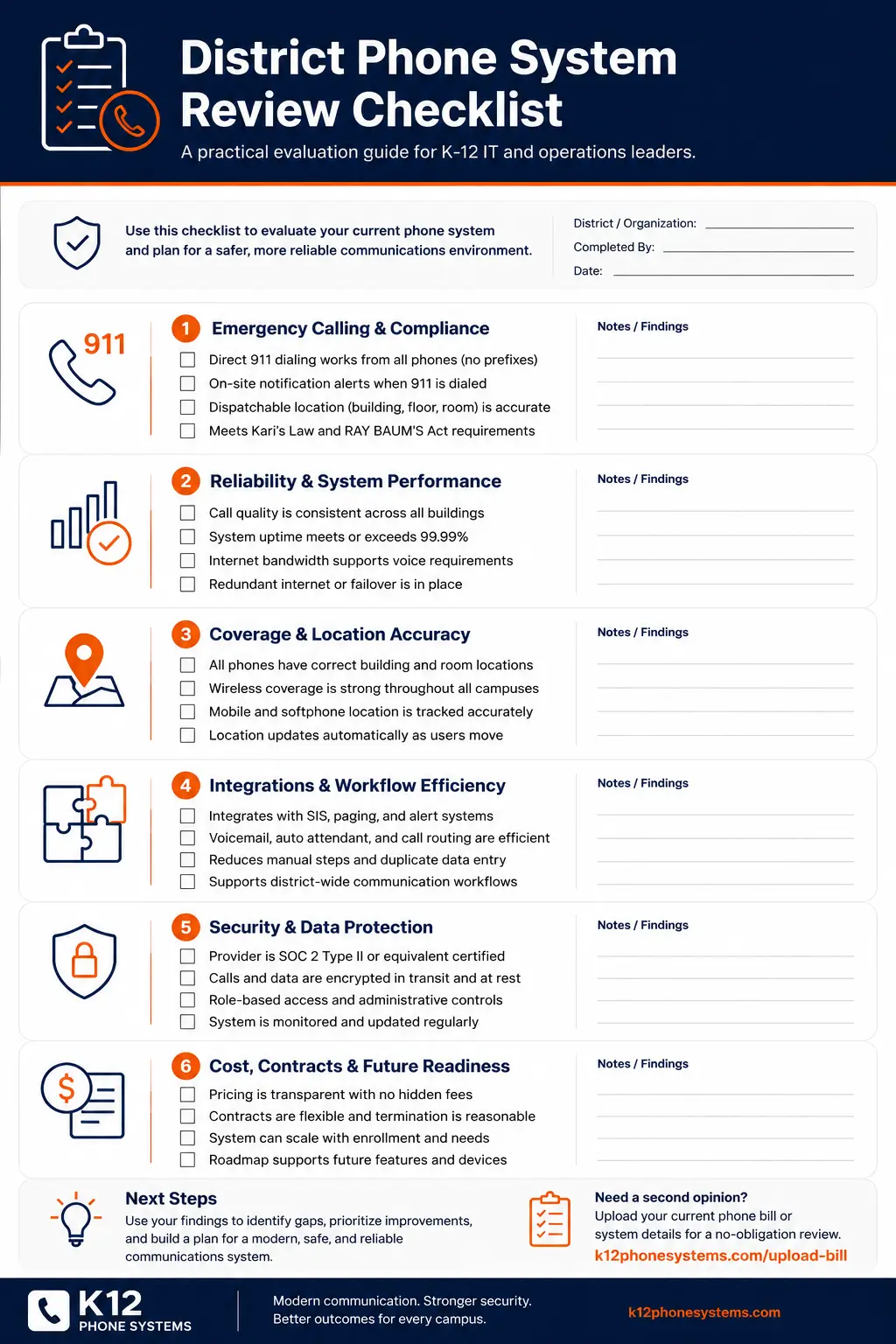
Use this guide with the School Phone System Buyer’s Guide, the District Phone System Review Checklist, and the Request System Review process before your district signs or renews a phone system agreement.
Start with the current problem
Before reviewing vendors, define the reason the district is considering a new phone system.
Common reasons include:
- Aging PBX hardware
- Support issues with the current system
- High hosted VoIP renewal costs
- Per-extension pricing that no longer matches actual usage
- E911 planning concerns
- Analog line replacement
- Poor campus call routing
- Unclear phone bills
- Number porting questions
- Softphone and mobile app needs
- A failed or painful prior deployment
A district should not sign a contract until the proposal clearly answers the problem that triggered the project.
| Question | Why it matters |
|---|---|
| What problem are we trying to solve? | Prevents buying features that do not address the real issue. |
| Is this a replacement, renewal, or redesign? | Each path has different risks and planning needs. |
| Which campuses or departments are affected first? | Helps define rollout scope and cutover sequence. |
| What happens if we wait another year? | Clarifies risk, cost, and support exposure. |
If the current system is old, review PBX Replacement for Schools. If the current system is already hosted, review Hosted VoIP for Schools: What Districts Should Review Before Renewal.
Questions about E911 and emergency calling
E911 planning should be one of the first contract topics, not a line item reviewed near the end. School districts need more than basic 911 dialing. They need to understand direct dialing, on-site notification, dispatchable location, shared spaces, mobile users, softphones, and testing.
Ask these questions:
- Does the system support direct 911 dialing without a prefix?
- How are on-site notifications handled when 911 is dialed?
- Who receives the alert?
- Does the notification include the caller, extension, and location?
- How is dispatchable location configured?
- Can locations be mapped by building, floor, room, zone, or area?
- How are portable classrooms handled?
- How are softphones and mobile apps handled?
- Who is responsible for maintaining location data after launch?
- How is emergency calling tested before cutover?
- Will testing be coordinated with the local public safety answering point?
The FCC describes MLTS 911 requirements tied to Kari’s Law and RAY BAUM’S Act, including direct 911 dialing, notification, and dispatchable location requirements [1]. Districts should review legal obligations with qualified counsel and appropriate public safety authorities.
Planning resource: Use the K-12 E911 Readiness Checklist before signing any school phone system agreement.
Questions about pricing model
A school phone system quote can look simple and still be expensive over time. The most common problem is per-extension pricing. Many districts have a large number of extensions but a much smaller number of simultaneous calls. If the district pays for every extension as if every classroom, office, and department is an active paid user, the monthly bill may be higher than necessary.
Ask:
- Are we being charged per user, per extension, per device, per call path, or by another model?
- Are classroom phones billed the same way as administrative users?
- Are unused extensions billable?
- Are softphone or mobile app seats included or extra?
- Are shared phones billed differently?
- Are common-area phones included?
- Are voicemail boxes billed separately?
- Are auto attendants or ring groups extra?
- Are taxes, fees, regulatory recovery charges, or surcharges clearly listed?
- Are support, porting, training, and cutover included?
- What changes at renewal?
A district should question any quote that treats all extensions the same. A classroom phone, front office phone, superintendent extension, transportation department phone, and mobile app user do not create the same usage pattern.
| Pricing item | Contract question |
|---|---|
| Per-extension fee | Are we paying for every extension, whether it is heavily used or not? |
| Device charge | Are phones purchased, rented, leased, or bundled? |
| Softphone/mobile app | Are these included or charged separately? |
| Support tier | What support is included without a higher plan? |
| Porting fee | Is number porting included, one-time, or billed per number? |
| Renewal change | Can pricing increase at renewal or after promotion period? |
For a deeper review of pricing risk, read Why Per-Extension VoIP Pricing Can Cost School Districts Too Much.
Questions about contract term and renewal
The contract term matters as much as the monthly price. A low starting rate may become expensive if the district is locked into a long renewal, automatic price increase, or difficult cancellation window.
Ask:
- What is the initial term?
- Does the contract auto-renew?
- How much notice is required to cancel?
- Can pricing change during the term?
- Can pricing change at renewal?
- Are promotional discounts temporary?
- Are equipment costs separate from service costs?
- What happens if the district closes, consolidates, or adds a campus?
- Can the district reduce extensions or services during the term?
- Are there early termination fees?
- Are there minimum monthly charges?
The contract should not punish the district for cleaning up unused extensions, reducing unnecessary seats, or correcting a bad current-state inventory.
Questions about number porting
Number porting is one of the most sensitive parts of a school phone system change. Main numbers, campus numbers, direct lines, transportation numbers, fax numbers, and specialty lines may all have different dependencies.
Ask:
- Which numbers will be ported?
- Which numbers should remain with another carrier?
- Which numbers are main numbers, DIDs, fax lines, or specialty lines?
- Who prepares the porting inventory?
- Who submits letters of authorization?
- What information is required from current bills?
- What happens if a port is rejected?
- Can porting be phased by campus?
- How are calls handled during the porting window?
- Are temporary forwarding plans available?
- How is port completion tested?
Before signing, the district should know whether the provider has accounted for all numbers, not just the obvious main lines.
Read What School Districts Should Know About Number Porting Before Changing Phone Systems before finalizing a replacement agreement.
Questions about call routing and school operations
A vendor proposal may describe features, but districts need to know how calls will actually move through buildings and departments.
Ask:
- How will the main district number route?
- How will each campus main number route?
- How are front office ring groups designed?
- What happens when the front office is busy?
- What happens after hours?
- How are attendance, transportation, maintenance, and administration reached?
- How are calls transferred between campuses?
- Can different schools have different call flows?
- How are weather closures or emergency messages updated?
- Who can change routing after launch?
- Is admin training included?
A phone system that works for a generic office may not fit school operations. School call flow is built around front offices, parent calls, attendance, transportation, campus administration, and district departments.
Questions about analog lines and specialty services
Many districts still have analog lines tied to fax machines, alarms, elevators, gates, intercoms, or other specialty devices. These should not be casually folded into a phone system replacement without review.
Ask:
- Which analog lines exist today?
- What devices or services depend on each line?
- Are any lines tied to life safety, alarms, elevators, or regulated systems?
- Which vendors need to be involved?
- Can any lines be retired?
- Which lines must remain as-is?
- Which lines can be migrated or replaced?
- How will these lines appear on the bill after migration?
- Who tests specialty services after changes?
Do not assume every analog line can or should become VoIP. Some specialty services require coordination with qualified vendors and local code requirements.
For more detail, read Why Analog Line Replacement Matters for School Districts.
Questions about devices, phones, and user access
The device plan should match actual district roles. Not everyone needs the same access.
Ask:
- Which users need desk phones?
- Which users need softphones?
- Which users need mobile apps?
- Which areas need common-area phones?
- Which classrooms need phones?
- Are phones purchased, rented, leased, or included?
- Are replacement devices covered?
- Are headsets included?
- Are conference room phones included?
- Who handles labeling and placement?
- Who trains users?
The contract should distinguish between user types. Paying full user pricing for rarely used endpoints can create avoidable cost.
Questions about network readiness and failover
Hosted phone systems rely on the district network and internet connection. Before signing, the district should understand what the vendor expects and what the district owns.
Ask:
- What network requirements must be met?
- Who reviews LAN, switches, cabling, and internet readiness?
- Does the system require Power over Ethernet?
- Are VLANs or voice network settings recommended?
- How are phones powered during an outage?
- What happens if the internet connection fails?
- Can calls fail over to alternate numbers?
- Can critical lines route to mobile numbers during outages?
- Who monitors call quality?
- Who handles network troubleshooting?
This is a technical area, but the contract should define responsibilities in plain language.
CISA provides cybersecurity guidance for K-12 technology acquisitions, and districts should evaluate technology purchases through security and operational risk, not only price [3].
Questions about support
Support language should be clear before the district signs.
Ask:
- What support is included?
- Is emergency support available after hours?
- What counts as an emergency?
- How are tickets submitted?
- What response times are promised?
- Who supports phones, routing, voicemail, and admin changes?
- Is cutover support included?
- Is training included?
- Are future call flow changes included or billable?
- Is there a separate charge for support after launch?
Support is where many phone system projects succeed or fail. The district should know who answers when phones do not work as expected.
Questions about implementation and cutover
Implementation should be more than shipping phones and setting a port date.
Ask:
- Who owns the migration plan?
- Is there a written cutover sequence?
- Can the project be phased by campus?
- Is there a pilot site?
- Are test calls included?
- Are E911 test procedures included?
- Are front office staff included in call flow review?
- Are phones labeled before rollout?
- Is staff training included?
- What happens if cutover needs to pause?
- What support is present on go-live day?
Use the District Phone System Modernization Roadmap to compare the proposal against a practical migration process.
Questions about documentation
The district should receive usable documentation after implementation.
Ask:
- Will we receive a number inventory?
- Will we receive extension records?
- Will we receive call flow documentation?
- Will we receive E911 location documentation?
- Will we receive admin login and permission documentation?
- Will we receive phone placement records?
- Will we receive support contacts?
- Will we receive a post-launch change process?
Poor documentation makes future support harder, especially after staff turnover.
A practical pre-signing checklist
Before signing, review these items:
- Current phone bill
- Current contract and renewal date
- Extension inventory
- Main number inventory
- Campus and building list
- E911 location records
- Analog line inventory
- Device count
- Call routing map
- Porting plan
- Cutover plan
- Support terms
- Renewal terms
- Cancellation terms
- Pricing model
- Included and excluded services
Planning resource: Use the District Phone System Review Checklist before approving a vendor proposal or renewal.
When to request a system review
A system review makes sense before signing if:
- You are replacing an aging PBX
- You are renewing a hosted VoIP contract
- Pricing is based on every extension
- You are unsure which numbers need to port
- E911 location data is unclear
- Analog lines are still on the bill
- Call routing differs by campus
- The vendor proposal does not explain cutover clearly
- Support responsibilities are vague
K12 Phone Systems can review the current phone environment, billing structure, E911 planning needs, number porting questions, and migration considerations before the district commits to a direction.
Related planning resources
- District Phone System Review Checklist
- School Phone System Buyer’s Guide
- District Phone System Modernization Roadmap
- K-12 E911 Readiness Checklist
- Legacy PBX Risk Map for School Districts
Frequently asked questions
What should a school district ask before signing a phone system contract?
Ask about E911, pricing model, contract term, renewal terms, number porting, analog lines, call routing, support, cutover, documentation, and network responsibilities.
Is per-extension pricing a problem for school districts?
It can be. Districts often have many extensions that do not generate the same usage. Paying the same amount for every extension can create unnecessary recurring cost.
Should we review an existing hosted VoIP contract before renewal?
Yes. Hosted VoIP contracts can become expensive or poorly matched to district operations over time, especially when the district is billed by extension.
Can a school phone system contract include E911 planning?
It should clearly describe how E911 planning, dispatchable location, on-site notification, testing, and location data maintenance are handled. Districts should confirm legal obligations with qualified counsel.
Should number porting be included in the contract?
The contract should explain who handles porting, which numbers are included, what information is required, and how rejected ports or phased ports are handled.
What should we ask about analog lines?
Ask which analog lines exist, what each line supports, which can be retired, which need specialty vendor review, and which should remain outside the hosted phone system.
Can a phone system cutover be phased by campus?
Yes. Many school districts should consider phased deployment by campus, department, or building group to reduce disruption.
What should we ask about support?
Ask what support is included, what response times apply, what counts as an emergency, how after-hours issues are handled, and whether future routing changes are billable.
What should we send before requesting a system review?
Send a phone bill, contract, vendor proposal, number list, extension list, campus list, or a summary of current problems. A perfect inventory is not required to start.
References
- Multi-line Telephone Systems 911 Direct Dialing, Notification, and Dispatchable Location Requirements
- E-Rate: Schools and Libraries Program
- Cybersecurity for K-12 Education
Ready to review a school phone system proposal before signing?
Share your current phone bill, contract, vendor proposal, campus list, or system notes. We will help identify pricing concerns, E911 planning questions, porting issues, support gaps, and migration considerations before your district commits.