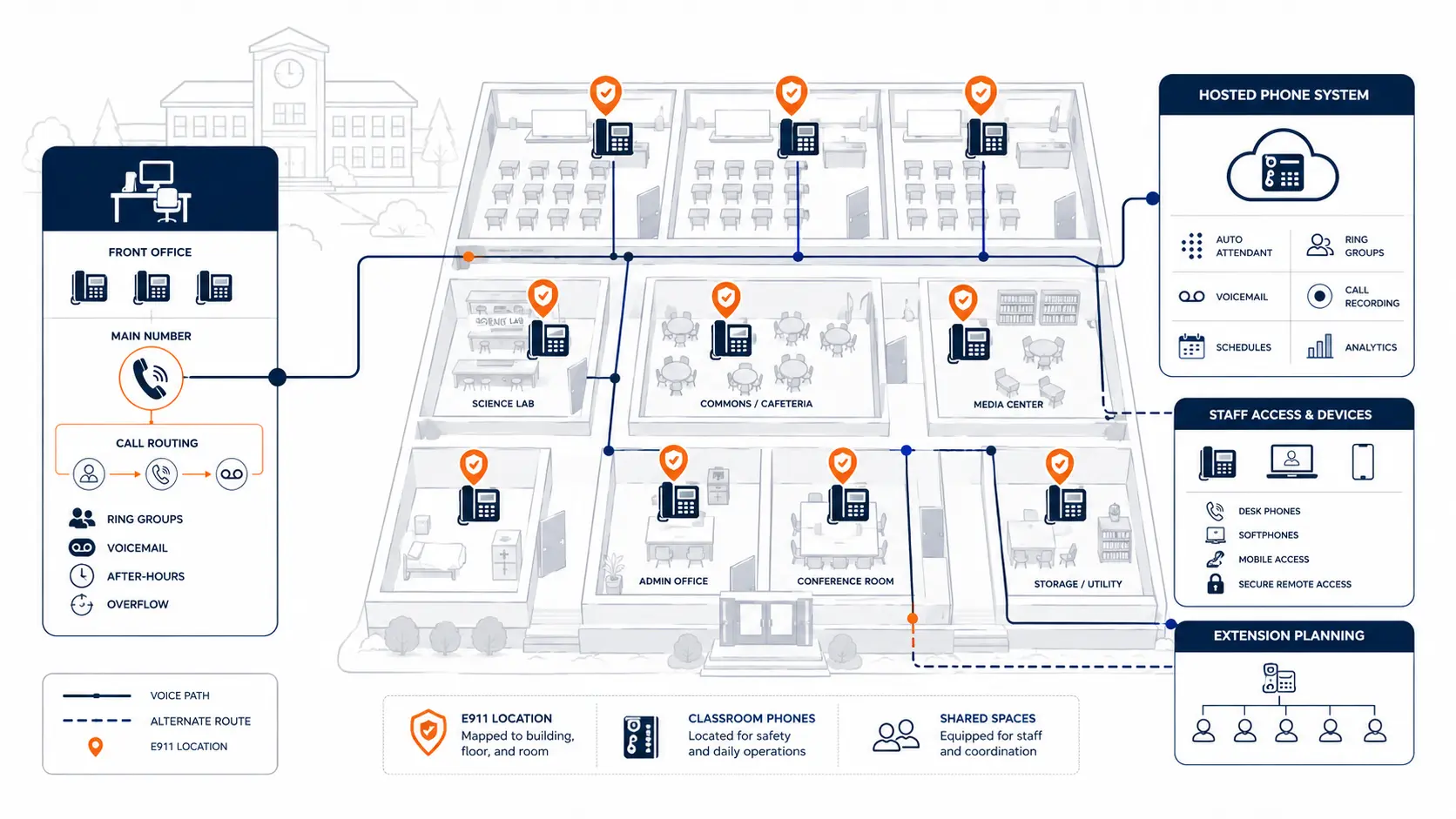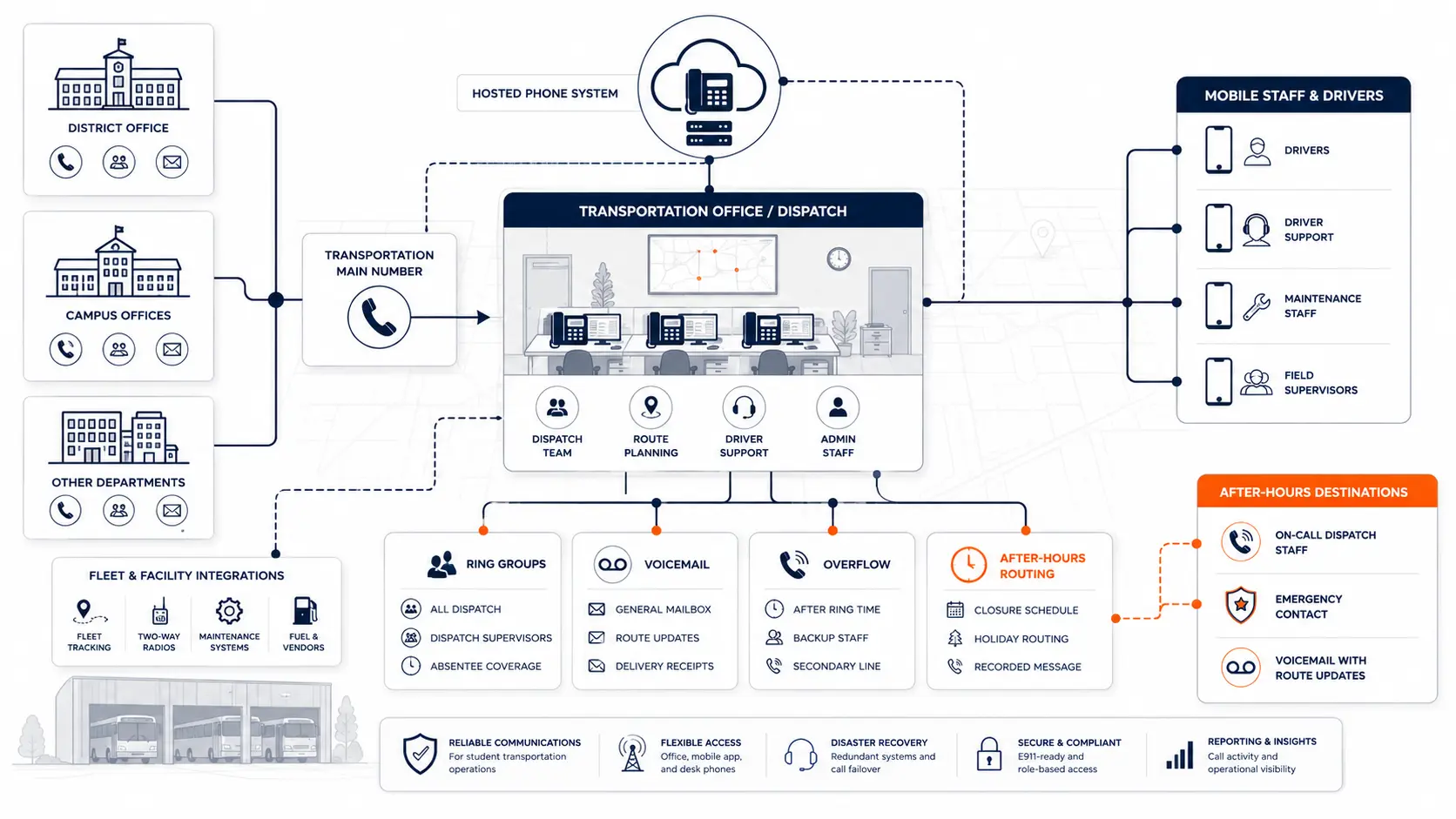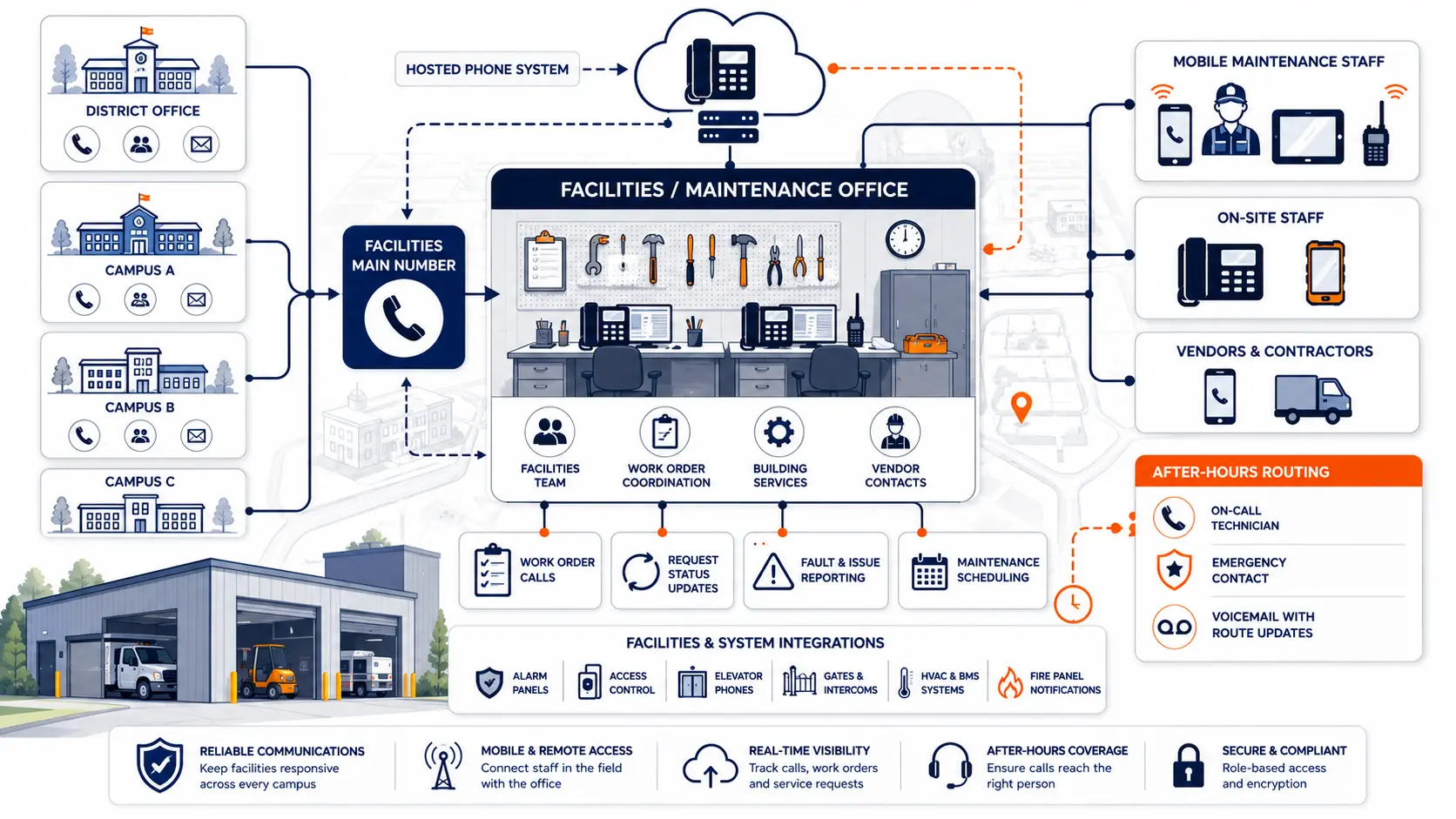
School maintenance departments often sit outside the main phone system conversation until something breaks. That is a mistake. Maintenance teams support buildings, HVAC issues, plumbing, repairs, grounds, custodial coordination, access systems, and urgent facility problems across the district. Their phone setup needs to be reviewed before a district replaces a PBX, renews a hosted VoIP contract, or moves to a new cloud phone system.
A maintenance phone system review should cover more than extensions. Districts need to understand how maintenance calls are routed, how after-hours issues reach the right people, how direct numbers are handled, where phones are located, how E911 records are maintained, which analog lines remain tied to building systems, and whether the district is paying too much for unused or low-use VoIP seats.
This guide is for technical planning and general education only. It is not legal advice. Districts should review emergency calling, procurement, and compliance questions with qualified counsel, public safety authorities, and appropriate state or local agencies.
Request System Review | Download the District Phone System Review Checklist
Why maintenance phones matter in school districts
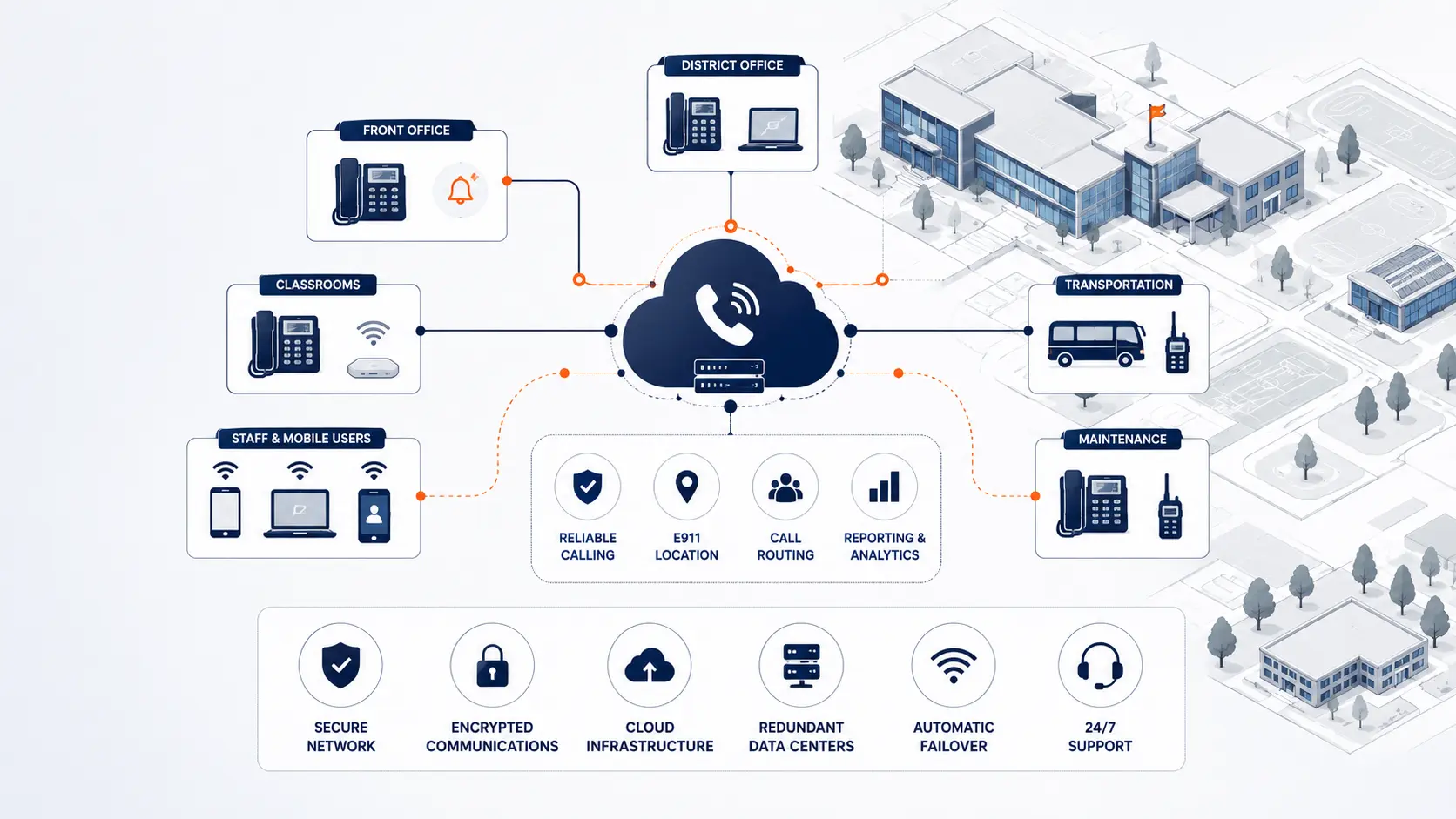
The maintenance department is part of district operations, not a side office. When a roof leak, broken air conditioner, failed door, power problem, water issue, or building access concern happens, staff need a clear path to reach the right team.
In many districts, maintenance communication grows over time without a clean plan. A few direct numbers get added. A bus garage phone may route through the same system. Custodial staff may call a shared extension. After-hours calls may forward to a cell phone. Old analog lines may still connect alarms, elevators, gates, or specialty devices. The result can be a phone setup nobody fully owns.
A modern review should ask:
- Which maintenance numbers are still active?
- Who answers during school hours?
- Who receives after-hours calls?
- Which buildings rely on maintenance phones?
- Are any analog lines tied to facility systems?
- Are phone locations accurate for emergency calling?
- Are hosted VoIP users billed by extension?
- Are low-use extensions driving unnecessary cost?
Maintenance may not generate the same call volume as a front office, but a failed maintenance call can still affect safety, building operations, and district trust.
What maintenance departments need from a phone system
Maintenance communication has a different pattern than front office calling. A parent call usually needs to reach attendance, reception, nursing, or administration. A maintenance call often needs to reach a department, a supervisor, or a rotating on-call person.
The phone system should support:
- A main maintenance number
- Direct numbers for maintenance supervisors
- Routing to specific teams or buildings
- After-hours call forwarding
- Voicemail to email for work order follow-up
- Clear caller ID for return calls
- Mobile access for staff who move across campuses
- E911 location records for fixed phones
- Analog line review for facility systems
- Simple updates when staff or building assignments change
The goal is not to give every maintenance employee a paid phone seat. The goal is to design a practical communication path that fits the work.
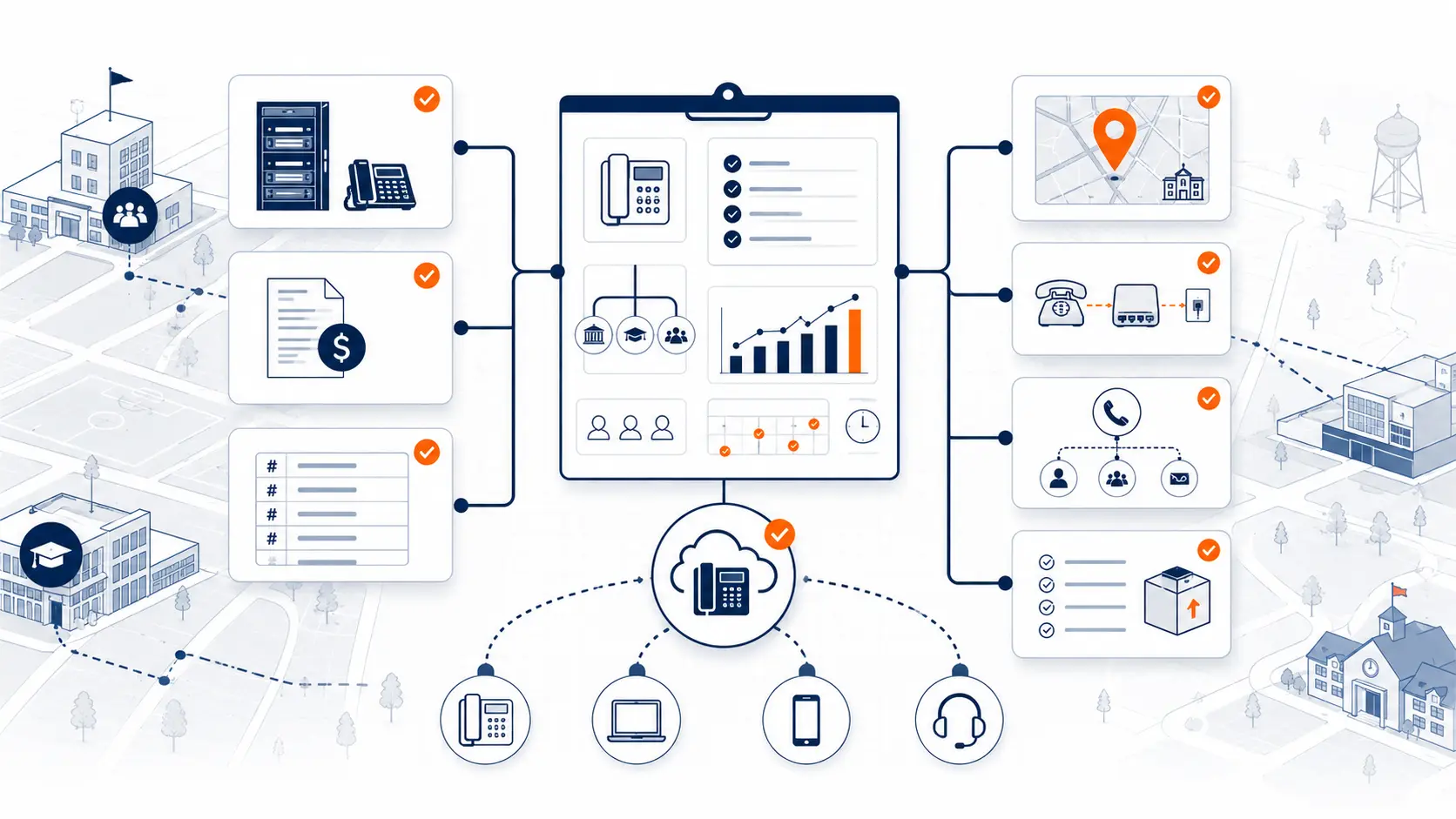
Maintenance phone review checklist
Before replacing or renewing a school phone system, districts should review maintenance communication in detail.
| Review area | Why it matters | Planning question |
|---|---|---|
| Main maintenance number | Staff need a predictable path to the department | Who answers this number during school hours? |
| After-hours routing | Facility problems can happen outside normal hours | Who receives urgent calls after closing? |
| Direct numbers | Old direct lines can be forgotten | Which numbers are still needed? |
| Mobile staff access | Maintenance staff move between campuses | Who needs mobile access and who does not? |
| E911 location records | Fixed phones must reflect real locations | Where are maintenance phones physically located? |
| Analog lines | Building systems may depend on non-VoIP lines | Which lines support alarms, elevators, gates, or specialty devices? |
| Hosted VoIP billing | Low-use users can inflate cost | Are you paying per extension for phones that rarely call? |
| Support ownership | Phone changes must be easy to request | Who updates routing, users, and call forwarding? |
This is the kind of review that should happen before a district signs a new contract or approves a migration plan.
Maintenance routing and after-hours coverage
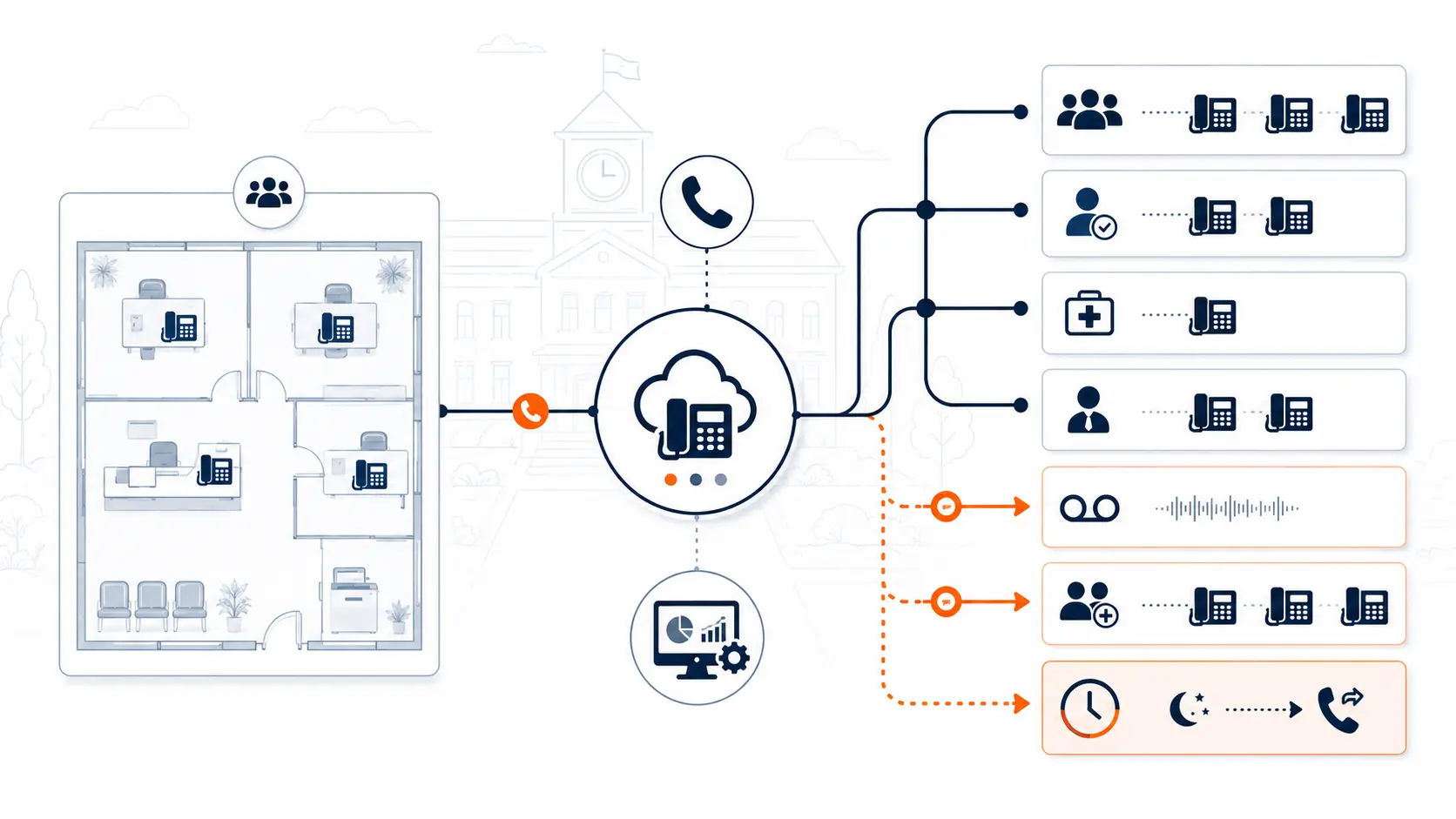
Maintenance call routing often has three modes:
- Normal school hours
- After-hours coverage
- Urgent facility issue handling
A simple main number may work during the day. After-hours routing is usually where problems appear. Some districts route the maintenance number to voicemail after closing. Others forward it to a supervisor’s cell phone. Some use a rotating on-call process that was never formally built into the phone system.
Questions to ask:
- Does the maintenance number go to a person, group, or voicemail?
- What happens after 4:30 p.m.?
- What happens on weekends?
- Who changes the on-call destination?
- Is the process documented?
- Can the district change routing without opening a carrier ticket?
- Are forwarded calls easy to identify?
- Does voicemail reach the right team?
If after-hours routing depends on one person’s cell phone, the district should document that risk. A phone system replacement is a good time to build a cleaner process.
E911 location records for maintenance spaces
Maintenance phones may be located in shops, warehouses, mechanical areas, custodial rooms, grounds buildings, transportation facilities, or district service centers. These locations should not be treated as generic district phones.
Kari’s Law and RAY BAUM’S Act created federal requirements around direct 911 dialing, on-site notification, and dispatchable location for covered multi-line telephone systems. The FCC explains MLTS 911 requirements, and the National 911 Program provides resources on Kari’s Law and RAY BAUM’S Act. [1][2]
For maintenance spaces, districts should review:
- Maintenance shop phones
- Custodial office phones
- Warehouse phones
- Facilities office phones
- Grounds department phones
- Transportation or bus garage phones
- Shared phones near mechanical or utility spaces
- Phones moved from one building to another
- Softphones used by facilities leaders
The important question is simple: if someone dials 911 from that device, will the location information be useful to responders?
For a broader planning resource, use the K-12 E911 Readiness Checklist.
Analog lines tied to maintenance and facilities
Maintenance departments are often where analog lines hide.
These may include:
- Fire alarm lines
- Burglar alarm lines
- Elevator phones
- Gate systems
- Door entry systems
- Fax lines
- HVAC modems
- Utility or monitoring lines
- Pool, athletic, or grounds facility lines
- Specialty vendor lines
Districts should not assume every analog line can be replaced with VoIP. Some specialty systems may require coordination with alarm vendors, elevator vendors, facilities contractors, public safety authorities, or other qualified providers.
Before changing the phone system, create a line inventory:
| Line type | Common location | Review question |
|---|---|---|
| Alarm line | School building or district facility | Who supports the alarm panel? |
| Elevator phone | Elevator equipment or cab | What does the elevator vendor require? |
| Gate or door line | Entry point or access system | Does the access vendor support replacement? |
| Fax line | Maintenance or admin office | Is fax still required? |
| Monitoring line | Mechanical or utility area | Who receives alerts from this line? |
Analog line replacement should be planned separately from normal desk phone replacement.
For more guidance, review Why Analog Line Replacement Matters for School Districts.
Hosted VoIP renewal concerns for maintenance teams
Not every phone system problem is old PBX hardware. Some districts already moved to hosted VoIP but still have a cost or design problem.
Maintenance departments are a good example. If the district pays per extension, it may be paying monthly for users or devices that rarely make calls. A maintenance team may need shared call paths, group routing, mobile access for a few supervisors, and voicemail handling. It may not need a full paid license for every low-use role.
Review the hosted VoIP invoice before renewal:
- Are all maintenance extensions still active?
- Are any former employees still licensed?
- Are shared area phones priced like full users?
- Are mobile apps billed for staff who do not use them?
- Are voicemail-only boxes billed as full extensions?
- Are after-hours routing features included or charged separately?
- Are device rental fees still active for old phones?
- Are support or admin changes charged per request?
- Are taxes, surcharges, and recovery fees clear?
The question is not only whether the system works. The question is whether the district is paying the right way for how maintenance actually communicates.
A District Phone System Review Checklist can help organize this review before renewal.
Maintenance communication during a phone system migration
During a migration, maintenance should be included in planning before cutover.
Review:
- Which maintenance numbers must remain active during transition
- Which phones are fixed in shops, warehouses, or facilities offices
- Which staff need mobile access
- Which after-hours routes must be rebuilt
- Which voicemail boxes must be retained or replaced
- Which analog lines must not be moved without separate review
- Which buildings should migrate first
- Which facilities staff should be available during testing
Maintenance is often critical during the migration itself. They may help with access to buildings, closets, offices, ceilings, and equipment areas. If the cutover plan ignores facilities coordination, the project can slow down.
Use the District Phone System Modernization Roadmap when building a phased plan.
Questions to ask before changing maintenance phone service
Before signing a new agreement, ask:
- How will the main maintenance number be routed?
- Can after-hours routing be changed by district staff?
- How are shared area phones priced?
- Are maintenance mobile users billed as full extensions?
- Can low-use phones be handled differently from full users?
- How will E911 location records be maintained for maintenance spaces?
- What happens to elevator, alarm, gate, fax, and specialty lines?
- Who coordinates with outside facilities vendors?
- Can migration be phased by building or department?
- What testing is done before cutover?
- What support is available after launch?
- How are future routing changes requested?
These questions help the district evaluate whether the proposal fits real operations instead of just matching an extension count.
How a district phone system review helps
A phone system review can help districts understand how maintenance communication fits into the larger district phone environment.
K12 Phone Systems reviews:
- Current PBX or hosted system setup
- Phone bills and hosted VoIP invoices
- Main maintenance numbers
- Routing and after-hours coverage
- Maintenance extensions and shared phones
- E911 location records
- Analog and specialty lines
- Number porting requirements
- Cutover timing
- Support expectations
- Pricing model concerns
The review is not only for districts replacing old PBX equipment. It can also help districts question whether an existing hosted VoIP system is priced and configured correctly.
Related planning resources
- District Phone System Review Checklist
- Legacy PBX Risk Map for School Districts
- District Phone System Modernization Roadmap
- K-12 E911 Readiness Checklist
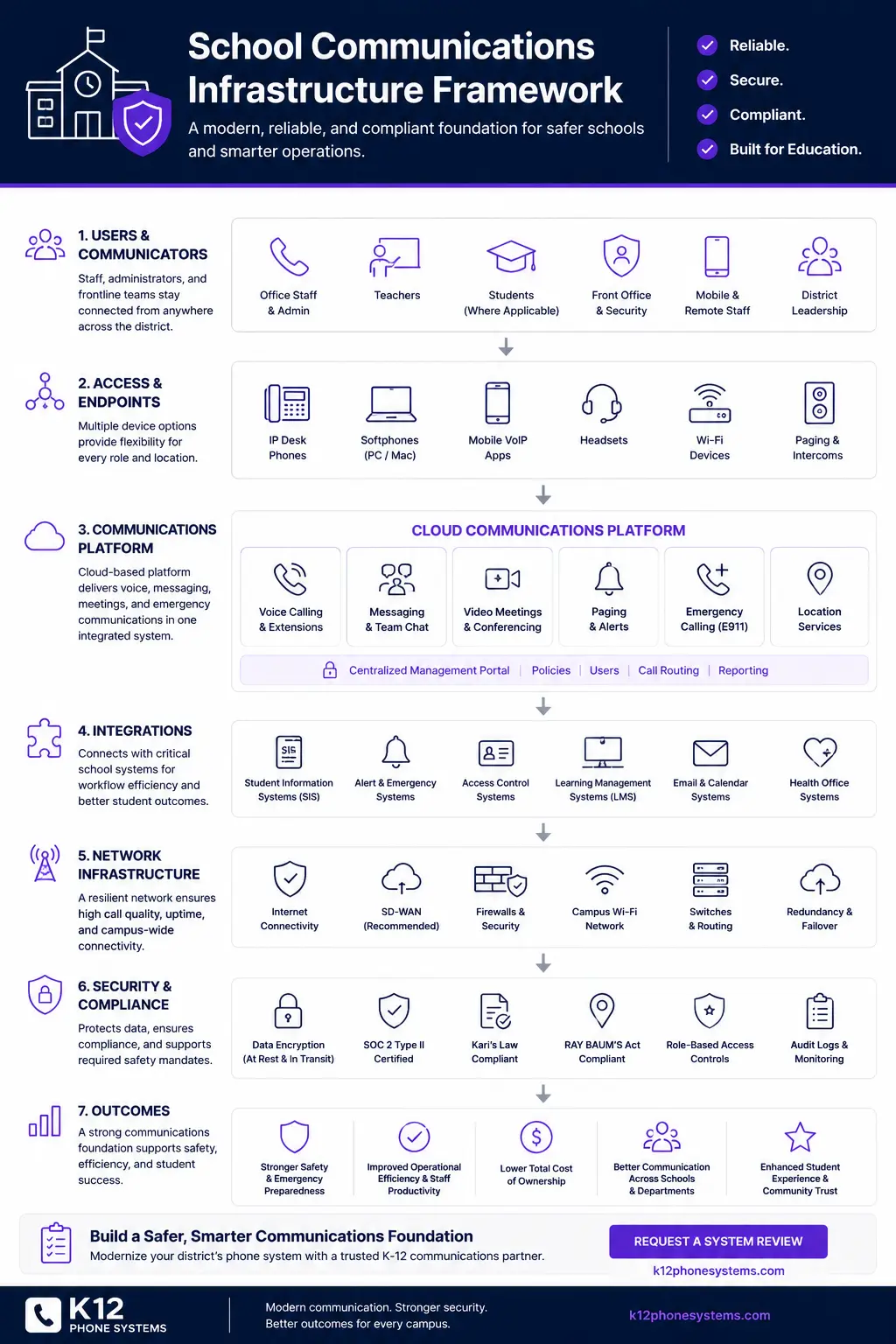
- School Communications Infrastructure Framework
Frequently asked questions
Do school maintenance departments need their own phone system?
Usually no. Maintenance should be part of the district phone system, but its routing, after-hours coverage, mobile access, and analog line needs should be reviewed separately.
Should every maintenance employee have a paid phone extension?
Not always. Some districts need extensions for supervisors, shared phones, and key staff. Others may be overpaying if every low-use role is billed as a full hosted VoIP user.
What should happen to the maintenance number after hours?
That depends on district policy. The important point is that after-hours routing should be documented, tested, and easy to update when staffing changes.
Do maintenance phones affect E911 planning?
Yes. Phones in shops, warehouses, grounds buildings, transportation facilities, and custodial areas should have accurate location records where emergency calling applies.
Can maintenance staff use mobile apps instead of desk phones?
Some can, but mobile app use should be reviewed carefully for caller ID, routing, support, E911 behavior, and cost. Mobile access should fit the role.
What analog lines are usually tied to maintenance or facilities?
Common examples include alarms, elevators, gates, door entry systems, fax lines, HVAC modems, and monitoring lines. These should be inventoried before any phone system change.
Can analog maintenance lines be replaced with VoIP?
Some may be replaceable. Others may require coordination with an alarm vendor, elevator vendor, access control vendor, or other qualified provider. Do not assume every line can be moved the same way.
Why review hosted VoIP pricing for maintenance extensions?
Maintenance departments often have shared phones, low-use roles, and mobile staff. Per-extension pricing can create unnecessary cost when every seat is billed the same way.
What should maintenance provide before a phone system review?
A list of maintenance numbers, shared phones, after-hours routes, analog lines, building locations, and known call problems is a good start. A phone bill or hosted VoIP invoice helps too.
Can maintenance be migrated separately from other departments?
Yes. Many districts phase phone migrations by campus or department. Maintenance should be included in the cutover plan because they often support physical access and building coordination during deployment.
References
Ready to review maintenance phone routing and system cost?
Share your current phone setup, phone bill, hosted VoIP invoice, campus list, or maintenance call flow notes. We will help identify routing issues, analog line concerns, E911 review areas, pricing model problems, and practical next steps.