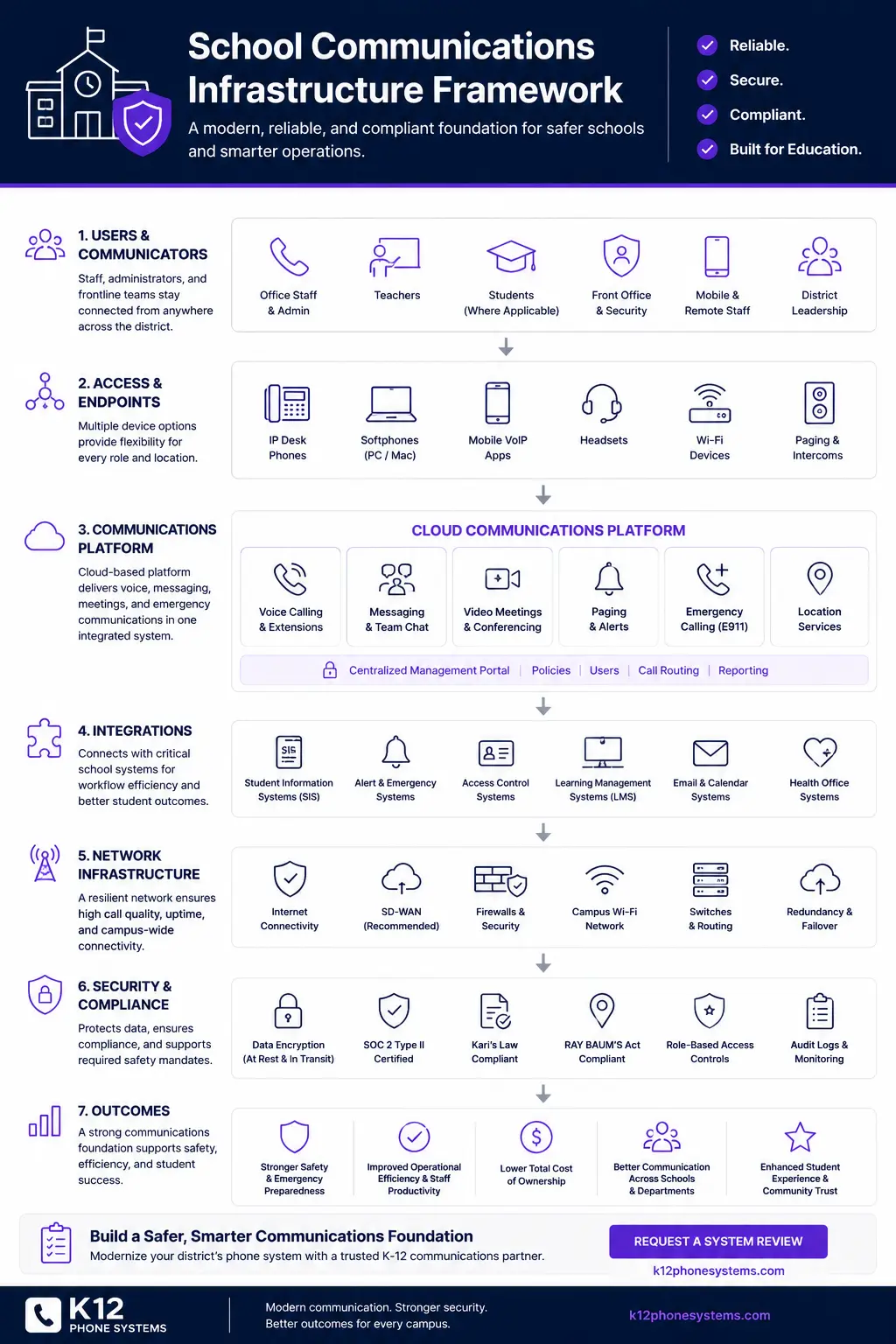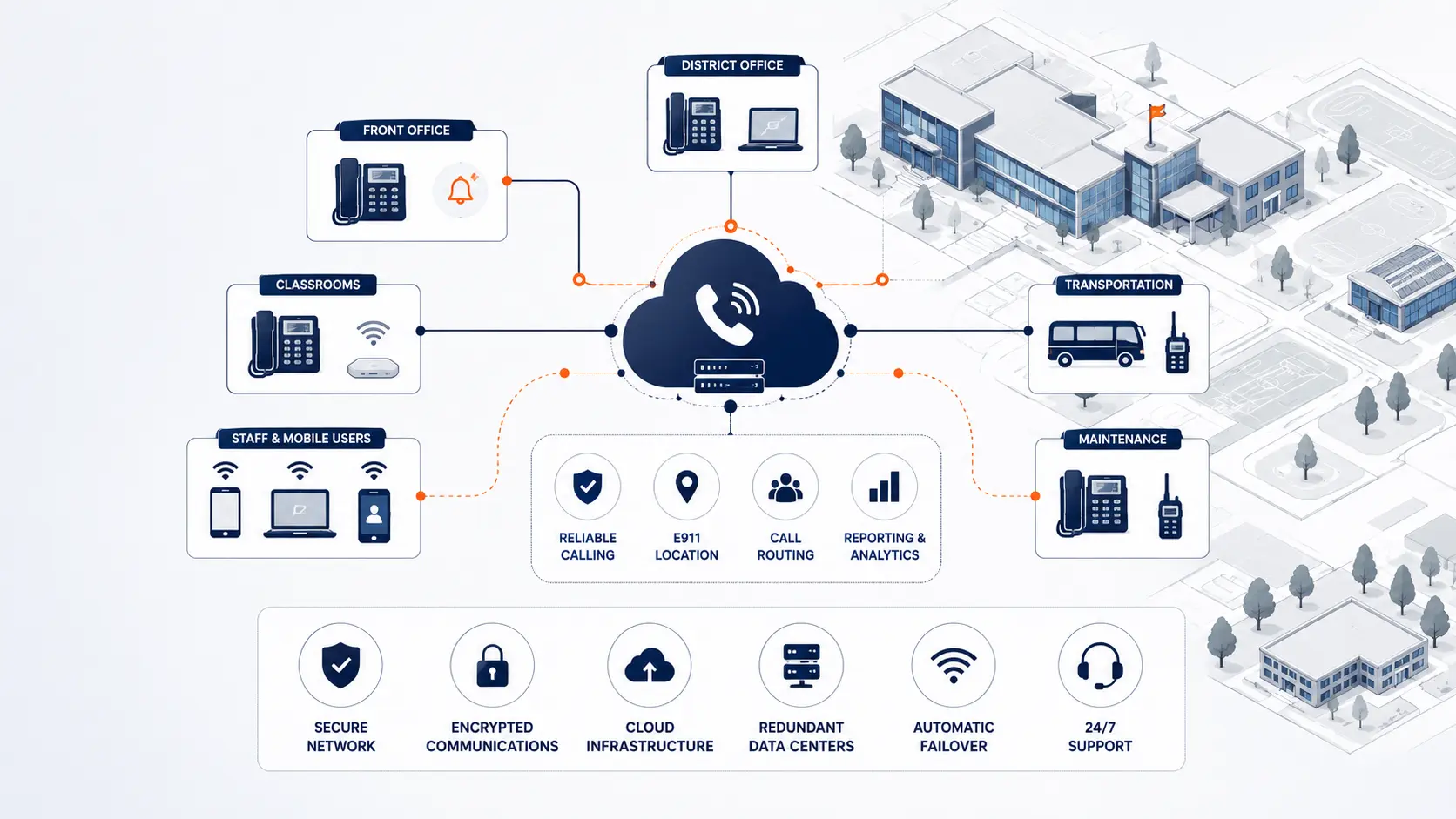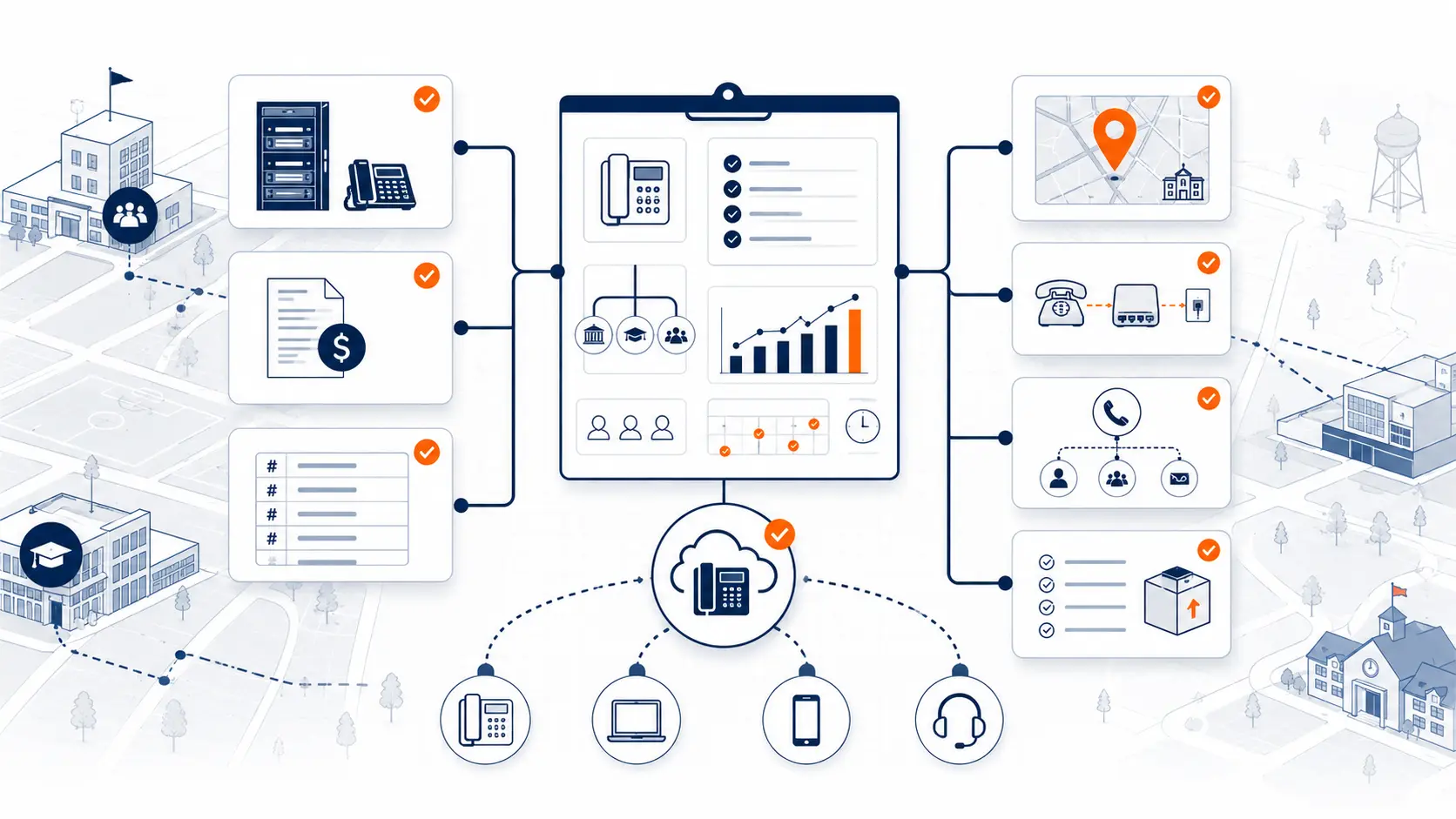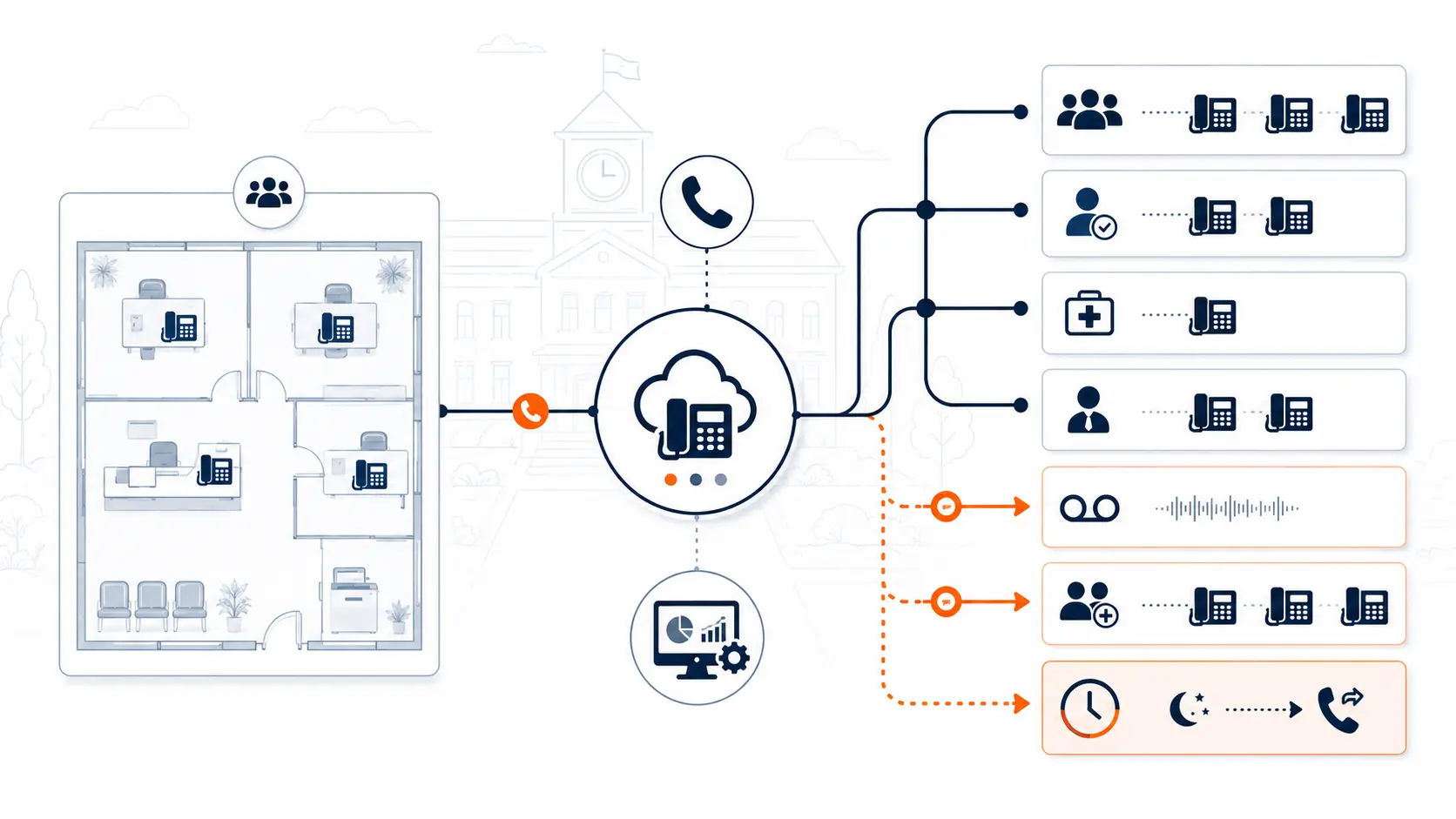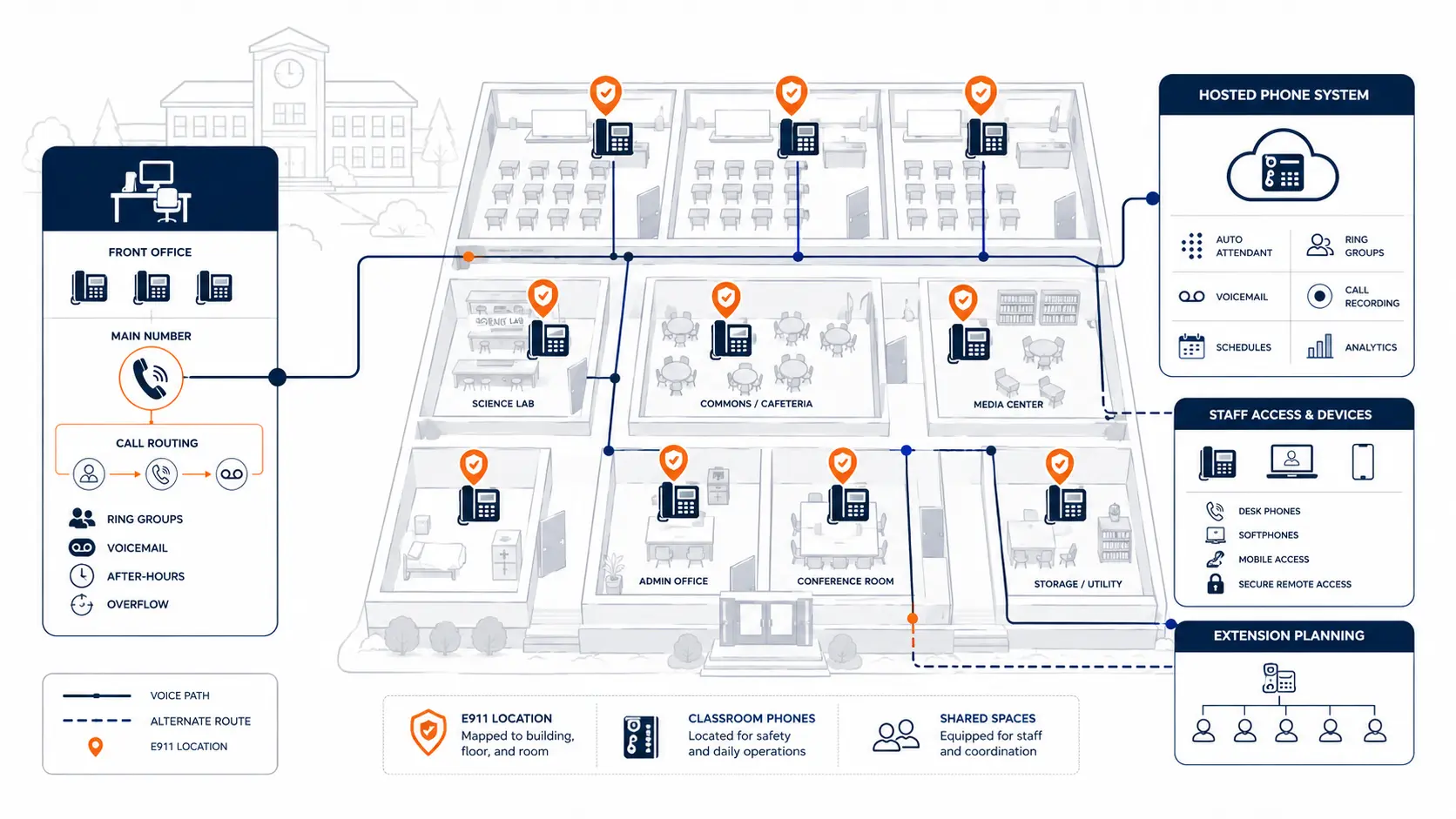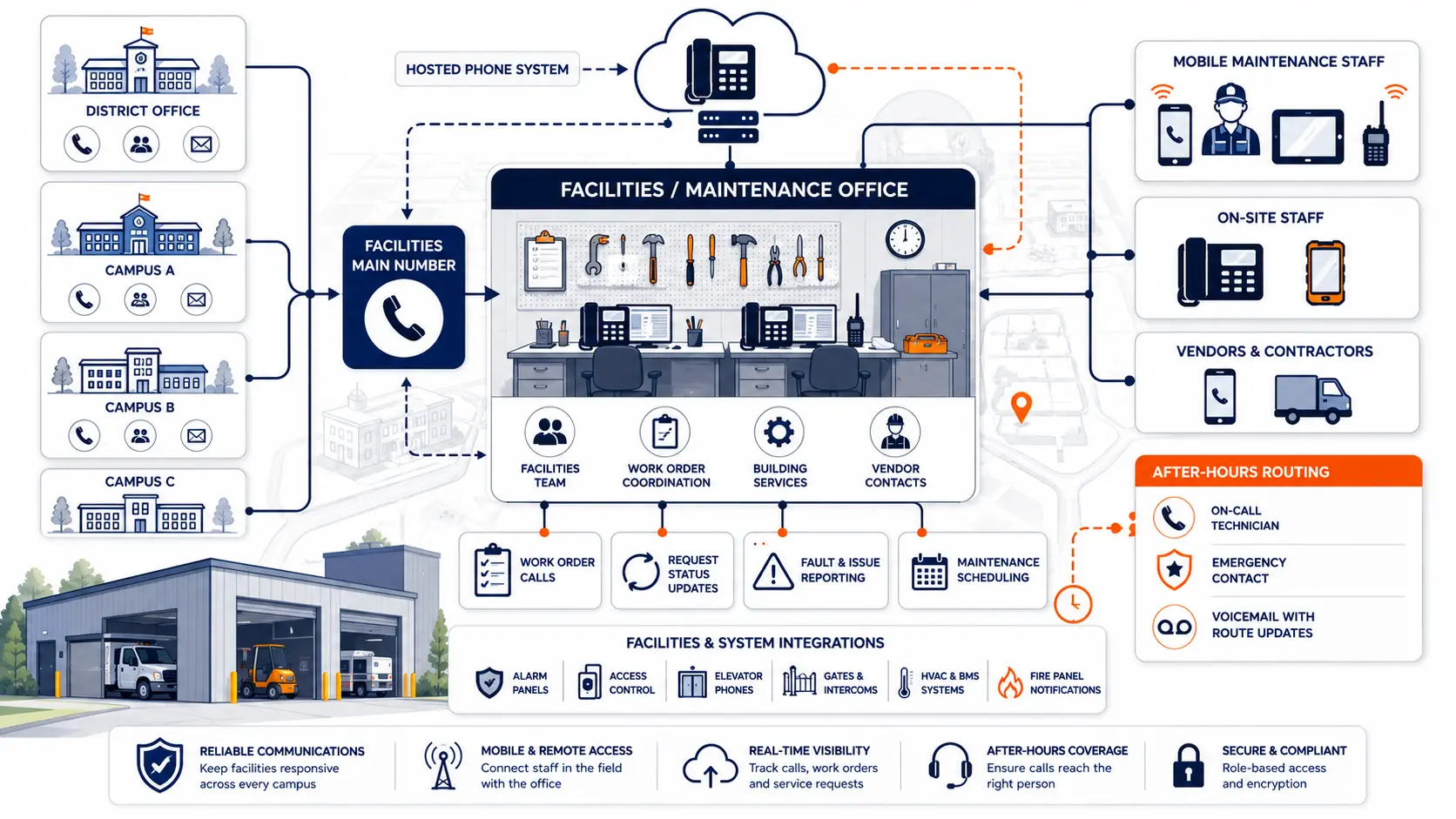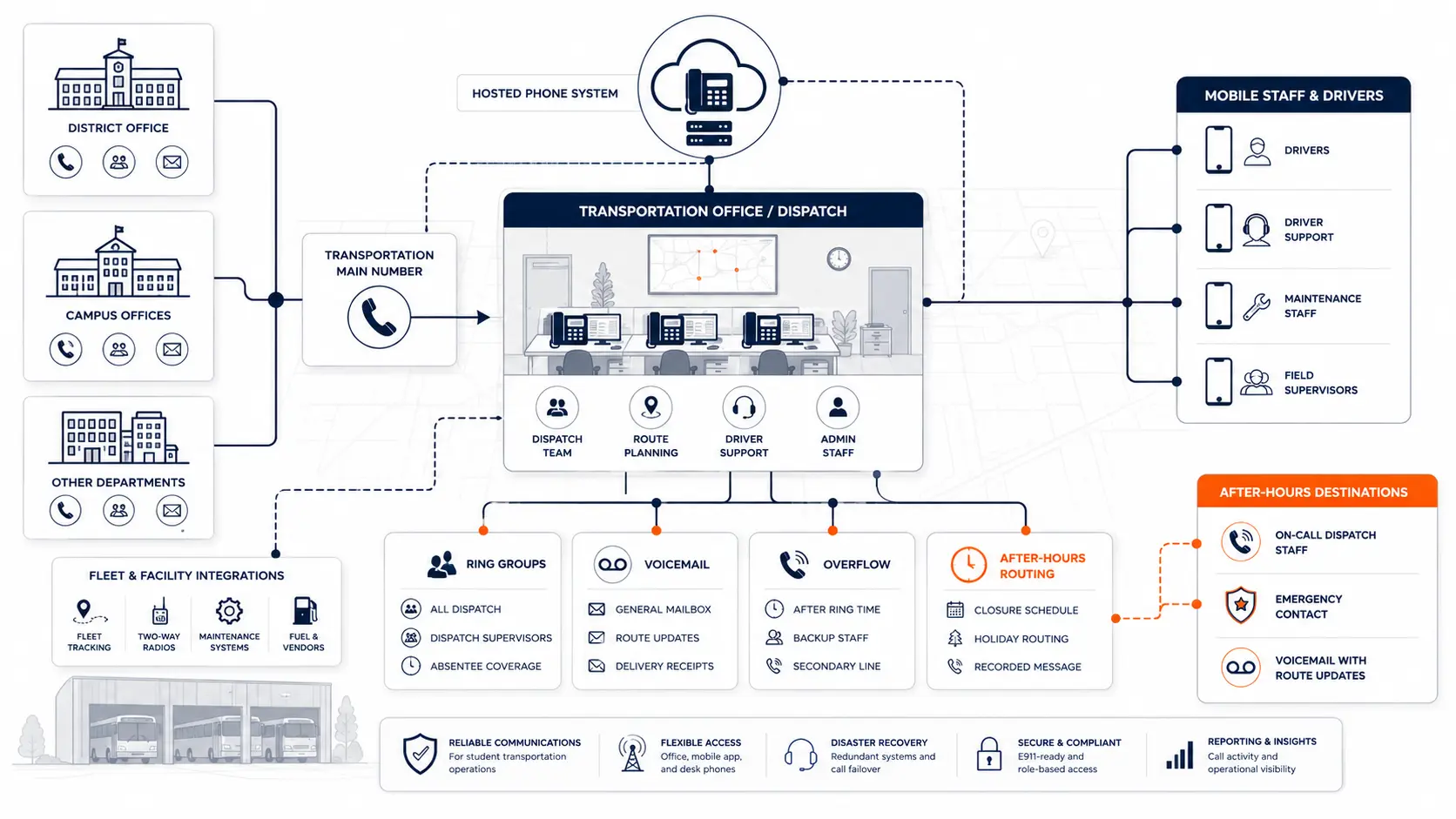
Transportation is one of the easiest areas to overlook during a school phone system replacement. The front office gets attention. The district office gets attention. Classrooms get attention. Transportation often gets handled late, after the district realizes that bus dispatch, route questions, maintenance calls, parent calls, driver communication, and after-hours routing do not behave like normal office extensions.
A school transportation phone system review should not be limited to the phones sitting on the dispatch desk. It should include main transportation numbers, call routing, bus garage phones, maintenance offices, after-hours forwarding, emergency calling, location records, carrier services, and the way transportation staff communicate with campuses and district leadership.
If your district is replacing an aging PBX, reviewing a hosted VoIP renewal, or planning a phased phone migration, transportation needs its own review path.
Request System Review | Download the District Phone System Review Checklist
Why transportation needs special phone system planning
Transportation departments operate differently from classrooms, front offices, and district administration. A school transportation office may handle parent calls, late buses, route updates, driver questions, student pickup issues, field trip coordination, maintenance concerns, and urgent operational calls early in the morning or late in the afternoon.
Those call patterns create phone system requirements that may not show up in a standard extension list.
Transportation teams often need:
- Reliable main number routing
- Fast call handling during peak windows
- Clear transfer paths to schools and district offices
- After-hours routing for urgent issues
- Phones in dispatch, maintenance, and garage areas
- Clear E911 location records for fixed phones
- A plan for mobile staff and non-fixed devices
- Support during migration and cutover
A district phone system can look complete on paper and still fail transportation staff if these workflows are not reviewed before replacement.
What transportation call flows should include
Transportation call flow is usually more time-sensitive than many administrative call paths. Parents may call when a bus is late. Drivers may call with route concerns. Campuses may need to reach dispatch during arrival or dismissal. District leadership may need quick access during weather, road closures, or operational changes.
A review should document how calls enter, where they go, and what happens when the first person cannot answer.
| Call flow area | What to review | Why it matters |
|---|---|---|
| Main transportation number | Ring group, hunt group, or queue behavior | Keeps parent and campus calls from landing with one person only |
| Peak call windows | Morning and afternoon call volume | Helps plan overflow and voicemail handling |
| School transfers | Routes from campus offices to transportation | Reduces delays during arrival and dismissal |
| After-hours calls | Forwarding, voicemail, or duty phone process | Keeps urgent transportation calls from disappearing |
| Maintenance calls | Separate routing for garage or fleet issues | Prevents dispatch from handling every operational call |
| Leadership escalation | Transfer paths to operations or administration | Helps serious issues reach the right people |
This should be reviewed before the district accepts a phone proposal. If the vendor only counts extensions, the transportation workflow may not be designed at all.
Transportation phones and locations to inventory
A transportation phone inventory should go beyond the main office. Districts should review every location where transportation staff answer or place calls.
Common locations include:
- Transportation front desk
- Dispatch desk
- Bus garage
- Fleet maintenance office
- Driver break area
- Parts or shop counter
- Fueling area office
- Transportation director office
- Shared operations building
- Temporary or portable transportation office
- Remote administrative workspace
Each fixed phone should be tied to a known physical location. That matters for support, cutover, troubleshooting, and E911 planning.
Planning resource: Use the District Phone System Review Checklist to document transportation numbers, extensions, phone locations, routing, carrier services, and support needs.
E911 planning for transportation facilities
Transportation facilities may not be on the same campus as a school building. They may sit behind a district office, near a bus yard, at a maintenance facility, or on a separate property. That makes E911 location planning important.
For fixed transportation phones, districts should review:
- Direct 911 dialing
- On-site notification recipients
- Dispatchable location records
- Building name or facility description
- Room, shop, garage, or office area
- Phone location after moves or replacements
- Testing procedure before and after cutover
The FCC describes MLTS 911 requirements around direct dialing, notification, and dispatchable location for covered multi-line telephone systems. Districts should use those requirements as planning inputs and confirm legal obligations with qualified counsel and public safety authorities. [1]
Transportation phone planning should connect to the broader E911 Compliance for Schools strategy and the K-12 E911 Readiness Checklist.
Driver communication is not the same as the phone system
A school phone system usually does not replace bus radios, GPS systems, routing software, or driver communication platforms. Those tools often serve a different operational role.
The phone system still matters because it handles parent calls, campus calls, district calls, vendor calls, maintenance calls, and administrative communication. It may also support transportation supervisors, dispatch desks, and operations staff who need district-managed numbers.
When reviewing transportation communication, separate these categories:
| Communication need | Typical system | Phone system planning role |
|---|---|---|
| Parent calls | District phone system | Route calls to dispatch or transportation office |
| Campus-to-transportation calls | District phone system | Provide direct extensions or transfer paths |
| Bus driver communication | Radio, mobile, or routing platform | Coordinate policy and escalation paths |
| Garage and fleet calls | Phone system | Route maintenance and vendor calls |
| Emergency response | 911, public safety, district protocols | Confirm fixed phone E911 location records |
| After-hours issues | Duty phone or routing process | Define forwarding or escalation |
The phone system should be reviewed as one part of the transportation communication environment, not as a replacement for every operational tool.
Hosted VoIP renewal issues in transportation
Some districts already moved transportation phones to hosted VoIP but still have problems. A hosted system can be technically modern and still poorly matched to transportation operations.
Common issues include:
- Every transportation extension is billed as a full user
- Shared phones are priced like individual staff seats
- Dispatch routing is still built around one person
- Call queues or ring groups are not tuned for peak windows
- After-hours routing is unclear
- Mobile apps are licensed but not used
- E911 location data was configured once and never reviewed
- Transportation numbers are buried in a district-wide auto attendant
- Support changes require vendor tickets for simple routing edits
If the district is paying by extension, it may be paying too much for phones that are shared, rarely used, or tied to locations rather than named users. Transportation is a good place to review whether the pricing model matches real use.
A better review question is not “How many extensions do we have?” It is:
Which people, places, numbers, and call paths need service, and how should they be priced and supported?
For more on this issue, see Why Per-Extension VoIP Pricing Can Cost School Districts Too Much and How Many Phone Extensions Does a School District Really Need?.
Number porting for transportation departments
Transportation departments often have numbers that parents, schools, vendors, and staff know well. Losing, misrouting, or delaying those numbers during migration can create immediate problems.
Before changing phone systems, districts should document:
- Published transportation main number
- Direct numbers for transportation leadership
- Fax numbers, if still used
- Bus garage or fleet numbers
- Maintenance vendor contact numbers
- After-hours forwarding numbers
- Numbers printed on district websites, forms, signs, or parent materials
- Numbers used by auto attendants or call routing rules
Number porting should be planned around the transportation calendar. A cutover during a busy routing period may create avoidable stress. The district should know which transportation numbers are porting, when they are porting, who is testing them, and what happens if a number does not route correctly.
For a deeper planning guide, see What School Districts Should Know About Number Porting Before Changing Phone Systems.
After-hours transportation routing
Transportation phone systems often need an after-hours plan. The right plan depends on district policy, staffing, and the types of calls transportation receives after normal hours.
Review these questions:
- Should the main number go to voicemail after hours?
- Should urgent calls forward to a duty phone?
- Should parents receive a recorded message with district-approved instructions?
- Should different routes exist for weather events or special schedules?
- Who owns after-hours message updates?
- Who tests forwarding after phone system changes?
- What happens during holidays or summer routing periods?
After-hours call handling should not be improvised during cutover. It should be documented, configured, tested, and owned by a specific department.
Transportation and multi-campus routing
Transportation is connected to every campus. That makes it part of the district’s multi-campus phone design.
A phone system review should document how each campus reaches transportation and how transportation reaches each campus. It should also review whether campus front offices can transfer parent calls cleanly without sending people through a confusing auto attendant.
In a larger district, there may be different routing needs by school level, geography, or transportation zone.
For example:
- Elementary schools may need direct routing to route coordinators.
- Middle and high schools may need different dismissal-time paths.
- Transportation may need direct access to campus front offices.
- Operations leadership may need escalation paths during closures or delays.
- Shared district numbers may need menu options that are easy for families to understand.
This is why transportation should be included in a Multi-Campus Phone Systems review, not treated as a separate afterthought.
What to review before replacing transportation phones
Before replacing or renewing the transportation phone system, gather what you can. The inventory does not need to be perfect, but it should be practical.
Review:
- Current transportation phone numbers
- Published numbers on websites and forms
- Main number call flow
- Dispatch ring group or queue
- Transportation extension list
- Shared phones and common area phones
- Garage and maintenance phones
- Fax lines or specialty lines
- After-hours routing
- Call recording requirements, if any
- E911 location records
- Phone bill and hosted VoIP invoice
- Current contract terms
- Support process for routing changes
- Known complaints from transportation staff
This review helps the district decide whether it needs new phones, better routing, better pricing, a cleaner migration plan, or all of the above.
Questions to ask before changing transportation phone systems
District teams should ask direct operational questions before signing a phone system proposal.
- How will the transportation main number route during peak call windows?
- Can dispatch calls ring multiple staff members?
- Can after-hours routing change by schedule?
- Who can update transportation auto attendant messages?
- How will bus garage phones be labeled and mapped?
- How will E911 location records be assigned for transportation buildings?
- How are shared transportation phones priced?
- Are mobile apps included, and who actually needs them?
- What happens to transportation numbers during porting?
- How will transportation test calls before go-live?
- What support is available during arrival or dismissal if something breaks?
- Can the district phase transportation separately from campuses?
These questions help move the conversation from “phone features” to operational readiness.
How a system review helps
A district phone system review helps identify how transportation fits into the wider communications environment. It can reveal outdated routing, unused extensions, billing mismatches, undocumented numbers, analog lines, weak after-hours processes, and E911 location questions.
K12 Phone Systems can review transportation as part of a broader district phone system assessment, including:
- Current phone bills and contracts
- Existing hosted VoIP or PBX setup
- Transportation numbers and routing
- Shared phone and extension usage
- E911 location planning
- Analog or specialty lines
- Number porting needs
- Cutover timing
- Support expectations
Related planning resources
- District Phone System Review Checklist
- District Phone System Modernization Roadmap
- K-12 E911 Readiness Checklist
- School Communications Infrastructure Framework
- School Phone Systems
- Multi-Campus Phone Systems
Frequently asked questions
Do school transportation departments need separate phone system planning?
Yes. Transportation departments often have distinct routing, after-hours, dispatch, garage, and parent communication needs. Those workflows should be reviewed separately from classrooms and district administration.
Can a hosted phone system support transportation dispatch?
Yes, but it must be configured around the way transportation answers calls. Ring groups, queues, schedules, overflow routing, and after-hours handling should be planned before cutover.
Does the phone system replace bus radios or routing software?
No. The phone system usually supports parent calls, campus calls, administrative calls, vendor calls, and office communication. Bus radios, GPS, and routing software serve different operational needs.
Should transportation phones have E911 location records?
Yes. Fixed phones in transportation offices, garages, and maintenance areas should be tied to accurate dispatchable location records. Districts should confirm requirements with qualified counsel and public safety authorities.
Can transportation phone replacement be phased separately?
Yes. Transportation can often be handled as its own migration group, especially if its numbers, call flows, and operating hours differ from campuses.
What should districts review on a hosted VoIP invoice?
Districts should review whether transportation extensions, shared phones, mobile app seats, call queue features, and support charges match actual use. Per-extension pricing can be costly when many phones are tied to locations rather than individual users.
What transportation numbers should be checked before porting?
Review the published transportation number, dispatch numbers, garage numbers, fax numbers, leadership numbers, after-hours forwarding numbers, and any numbers printed on parent materials.
What is the biggest transportation phone system mistake?
The biggest mistake is treating transportation as a generic office department. Transportation has time-sensitive call patterns, district-wide dependencies, and after-hours needs that should be planned before migration.
References
Ready to review transportation phone routing?
Share your current phone setup, transportation numbers, phone bill, campus list, or vendor proposal. We will help identify routing issues, E911 review areas, migration considerations, and practical next steps.