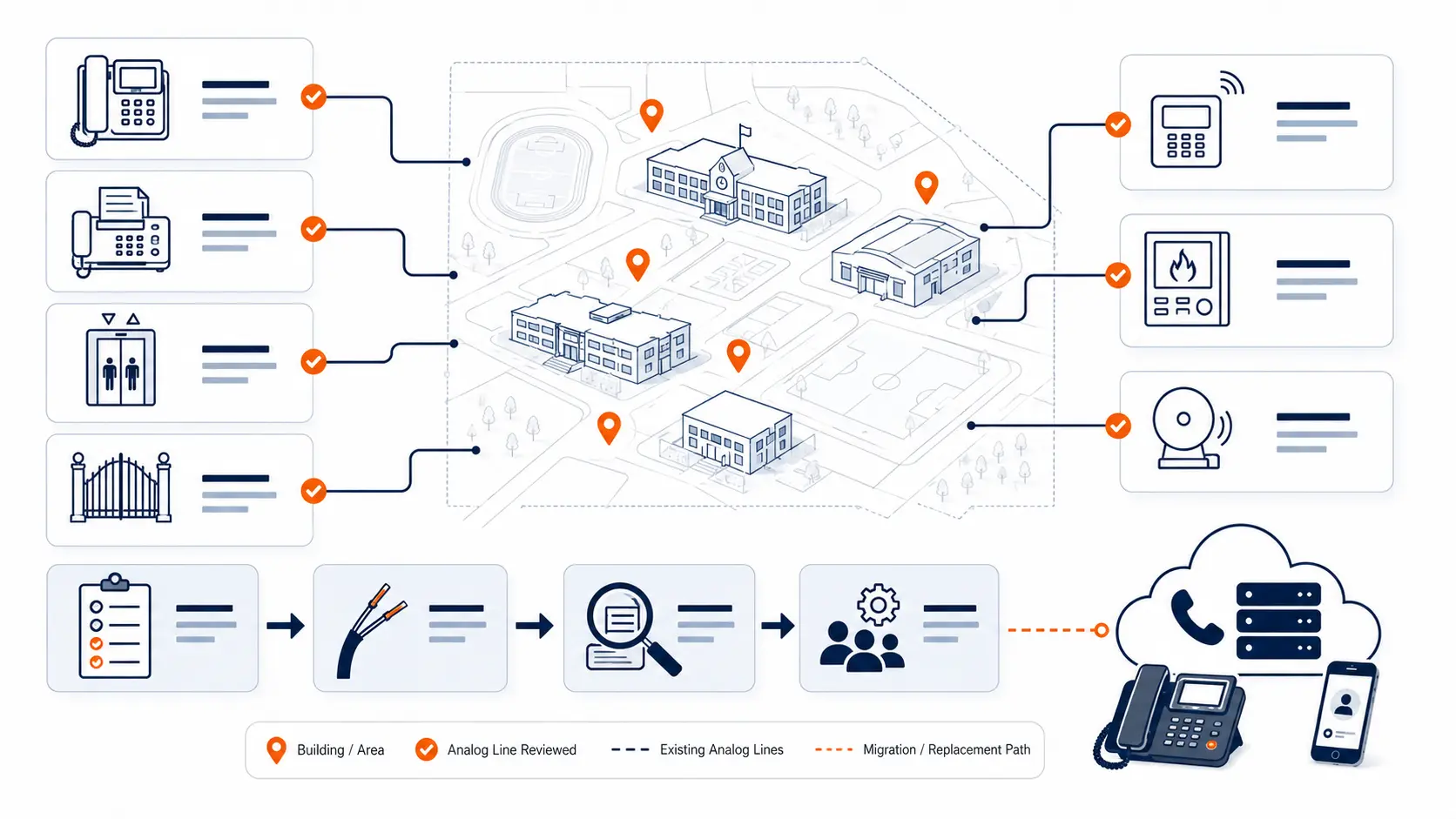
Analog line replacement can look like a small telecom cleanup project until a district starts listing everything still attached to old carrier services. In many school environments, analog lines may support voice service, fax machines, alarm panels, elevator phones, gates, door systems, bus garages, maintenance buildings, and other specialty uses. Those lines often sit outside the main phone system plan, which is why they can create surprise costs, cutover delays, and emergency calling questions during a phone replacement project.
For districts replacing a PBX, renewing a hosted VoIP agreement, or moving to a cloud phone system for schools, analog line review should happen early. The goal is not to remove every analog line blindly. The goal is to identify what each line does, who depends on it, what contract it belongs to, and whether it should be replaced, retained, converted, or handled by a specialty vendor.
Request System Review | Download the District Phone System Modernization Roadmap
What analog lines are in a school district
An analog line is a traditional carrier phone line that connects a device or service to the public telephone network. In older school environments, analog lines were often installed one need at a time. A school needed a fax line, a line was ordered. A building needed an alarm panel connection, another line was ordered. A gate, elevator, or remote office needed service, another line was added.
Years later, those lines may still appear on carrier bills, but the district may not have a clean record of what they support.
A school district may have analog lines connected to:
- Main office voice lines
- Backup voice lines
- Fax machines
- Fire alarm panels
- Security alarm panels
- Elevator phones
- Gate systems
- Door entry systems
- HVAC or building control systems
- Bus garage phones
- Maintenance facilities
- Athletic buildings
- Portable buildings
- Legacy modem devices
- Emergency or backup circuits
Some of these lines may be candidates for replacement. Others may need special handling. Treating every analog line as a simple phone line is one of the fastest ways to create problems during migration.
Why analog line replacement matters during phone system planning
Analog line replacement matters because old lines often touch services beyond ordinary calling. A district may be ready to replace an aging PBX, but if nobody reviews specialty lines, the new phone system project may miss devices that still depend on carrier circuits.
This can create several problems:
- The district keeps paying for unnecessary lines after migration.
- A needed specialty line is accidentally disconnected.
- E911 records do not match actual device locations.
- Elevator, alarm, or gate systems are not handled by the right vendor.
- Carrier bills remain confusing after the new system launches.
- The phone replacement project appears complete, but the district still has unmanaged telecom services.
Analog line review protects the project from becoming a partial migration. The phone system may move to hosted service, but the district still needs to understand every carrier line that remains.
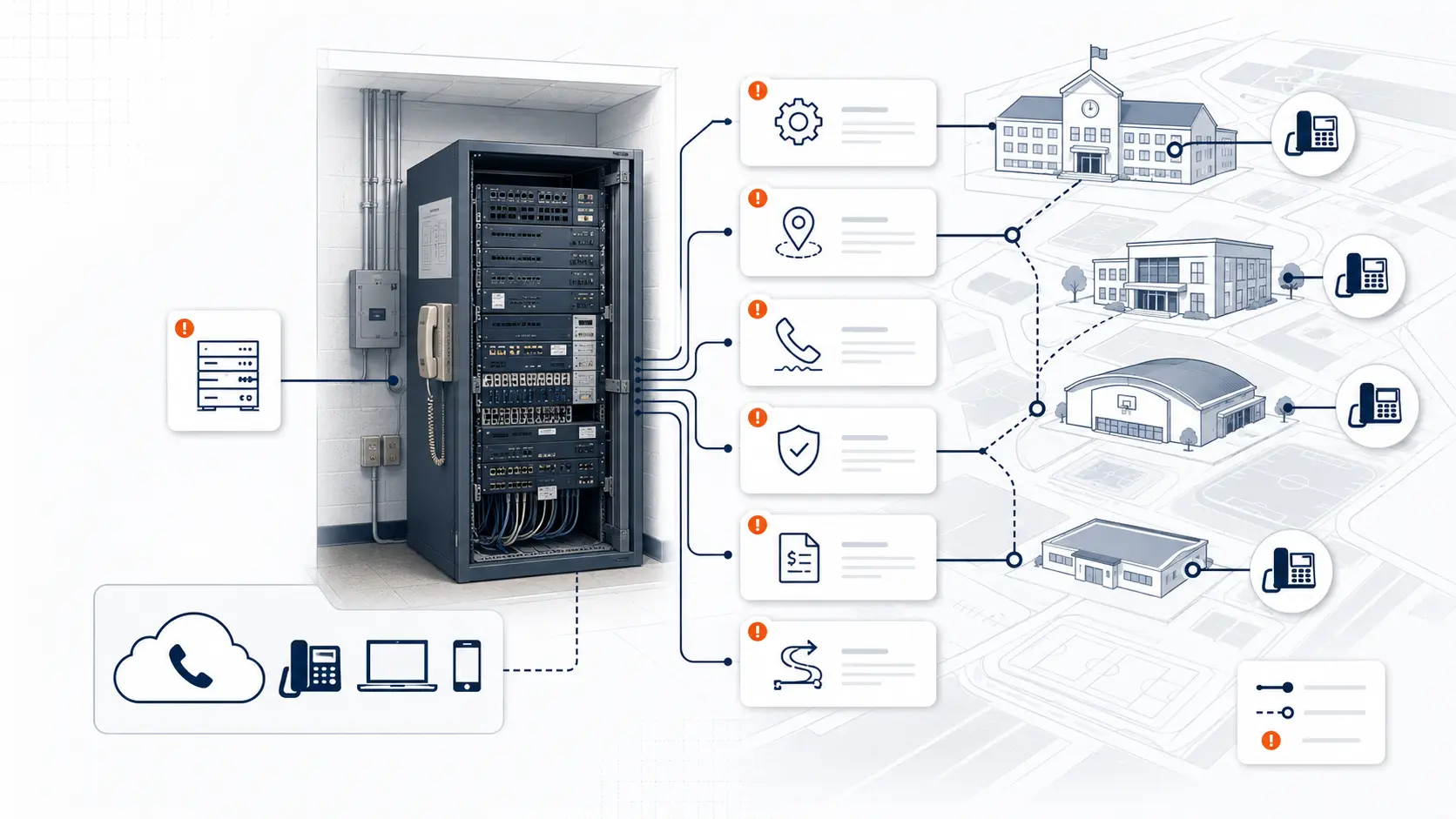
Common places analog lines hide
Analog lines are easy to miss because they are not always visible to the IT team. They may be managed by facilities, safety, transportation, athletics, or a campus office.
| Analog line location | Why it may be missed | What to review |
|---|---|---|
| Fax machine | It may not be part of the main phone system | Whether fax is still needed and who uses it |
| Elevator phone | It may be managed by facilities or an elevator vendor | Compliance, monitoring, vendor requirements, and location records |
| Fire alarm panel | It may be tied to a monitoring contract | Alarm vendor requirements and approved communication paths |
| Security alarm panel | It may appear as a low-cost carrier line | Monitoring company requirements and testing process |
| Gate or door system | It may be maintained by facilities or security | Device compatibility and call routing |
| Bus garage | It may use a separate carrier bill | Main number, backup number, and emergency use |
| Athletic facility | It may have independent service | Usage, location, and billing ownership |
| Portable classroom | It may have temporary or old service | Current use and E911 location accuracy |
The most important step is to stop thinking of analog line review as a phone-only task. It is a cross-department inventory.
Analog lines and E911 readiness
Analog lines can affect emergency calling readiness. A line may have a service address tied to a district office, billing address, or main campus rather than the actual device location. For ordinary billing, that may go unnoticed. For emergency calling, location records matter.
During analog line review, districts should ask:
- What address is associated with this line?
- Is the line connected to a fixed device?
- Is the device location correct?
- Is the line used for emergency calling?
- Who maintains the location record?
- Does the line need to remain separate from the phone system?
- Should this line be reviewed with a public safety, alarm, elevator, or carrier specialist?
Kari’s Law and RAY BAUM’S Act planning should be reviewed as part of the broader phone system project, but analog specialty lines may require extra care. Use the K-12 E911 Readiness Checklist to review direct 911 dialing, on-site notification, dispatchable location, mobile handling, and testing procedures.
This article is for technical planning and general education only. It is not legal advice. Districts should review compliance questions with qualified counsel, public safety authorities, and appropriate state or local agencies.
Why analog line costs can be hard to see
Analog line costs are often buried in carrier bills. A district may see line charges, taxes, surcharges, long-distance charges, maintenance charges, and old service descriptions that no longer match actual use.
The problem is not only the monthly rate. The problem is uncertainty.
A district may not know:
- Which lines are still active
- Which buildings use each line
- Which lines are tied to alarms or elevators
- Which lines are duplicates
- Which lines belong to old vendors
- Which lines should be removed after migration
- Which lines should remain for safety or specialty use
This is why a phone system review should include carrier bills, not just phone features. If the district is replacing a PBX but leaves old carrier services untouched, it may continue paying for services that should have been reviewed as part of the migration.
Analog line replacement is not always VoIP replacement
Some analog lines can move into a modern phone system plan. Some can be converted to other technologies. Some should remain under a dedicated specialty vendor. Some may need to stay until the district confirms a safe replacement path.
Examples:
- A front office voice line may move into a hosted phone system.
- A fax line may be replaced with digital fax or removed if no longer used.
- An elevator phone may require coordination with the elevator service provider.
- A fire alarm line may require review by the alarm vendor and authority having jurisdiction.
- A gate system may need hardware compatibility review.
- A portable building may need location and connectivity review before any change.
The right question is not “Can we convert every line?” The right question is “What does this line do, and what is the safe replacement path?”
What to inventory before changing analog services
Before disconnecting, porting, or converting analog lines, districts should build a practical inventory.
Review:
- Carrier account numbers
- Billing telephone numbers
- Service address for each line
- Physical location
- Connected device
- Department owner
- Vendor owner, if any
- Monthly cost
- Contract status
- Emergency use
- Monitoring use
- Replacement option
- Testing requirement
- Cutover risk
A simple spreadsheet is enough to start. The key is to connect billing records to physical locations and actual use.
Planning resource: Use the District Phone System Review Checklist to organize current carrier services, numbers, buildings, call routing, E911 questions, and migration planning notes.
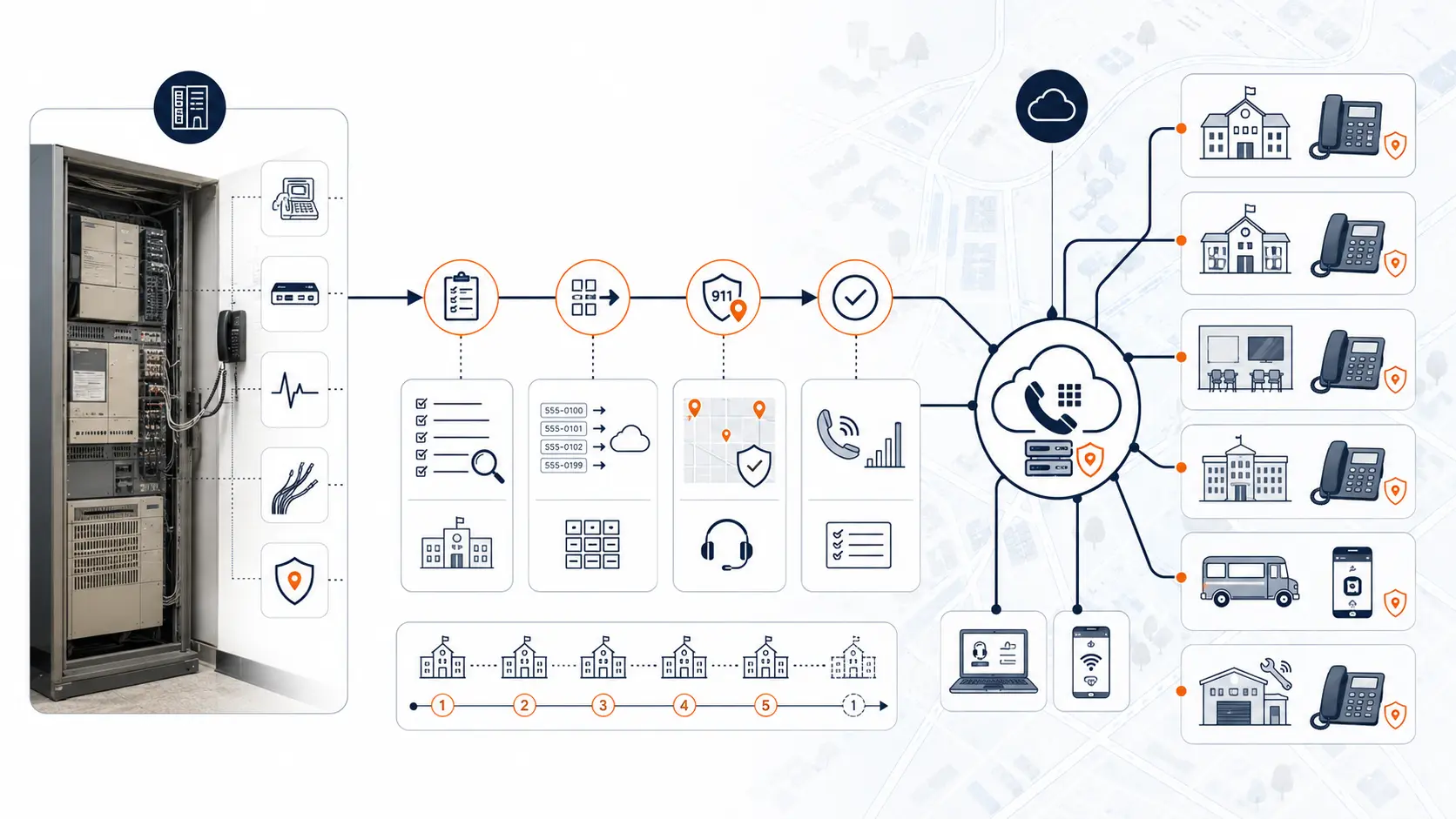
How analog line review fits into PBX replacement
Analog line review should happen before the district finalizes a PBX replacement plan. If the district only reviews extensions and handsets, the project may miss carrier services that keep old costs and risks alive.
A better PBX replacement review includes:
- Current PBX or hosted system
- Carrier bills
- Main numbers
- Direct inward dial numbers
- Analog lines
- Specialty lines
- Alarm and elevator dependencies
- Fax requirements
- Building and campus list
- E911 records
- Call routing
- Number porting
- Cutover timing
For a deeper replacement planning guide, see PBX Replacement for Schools.
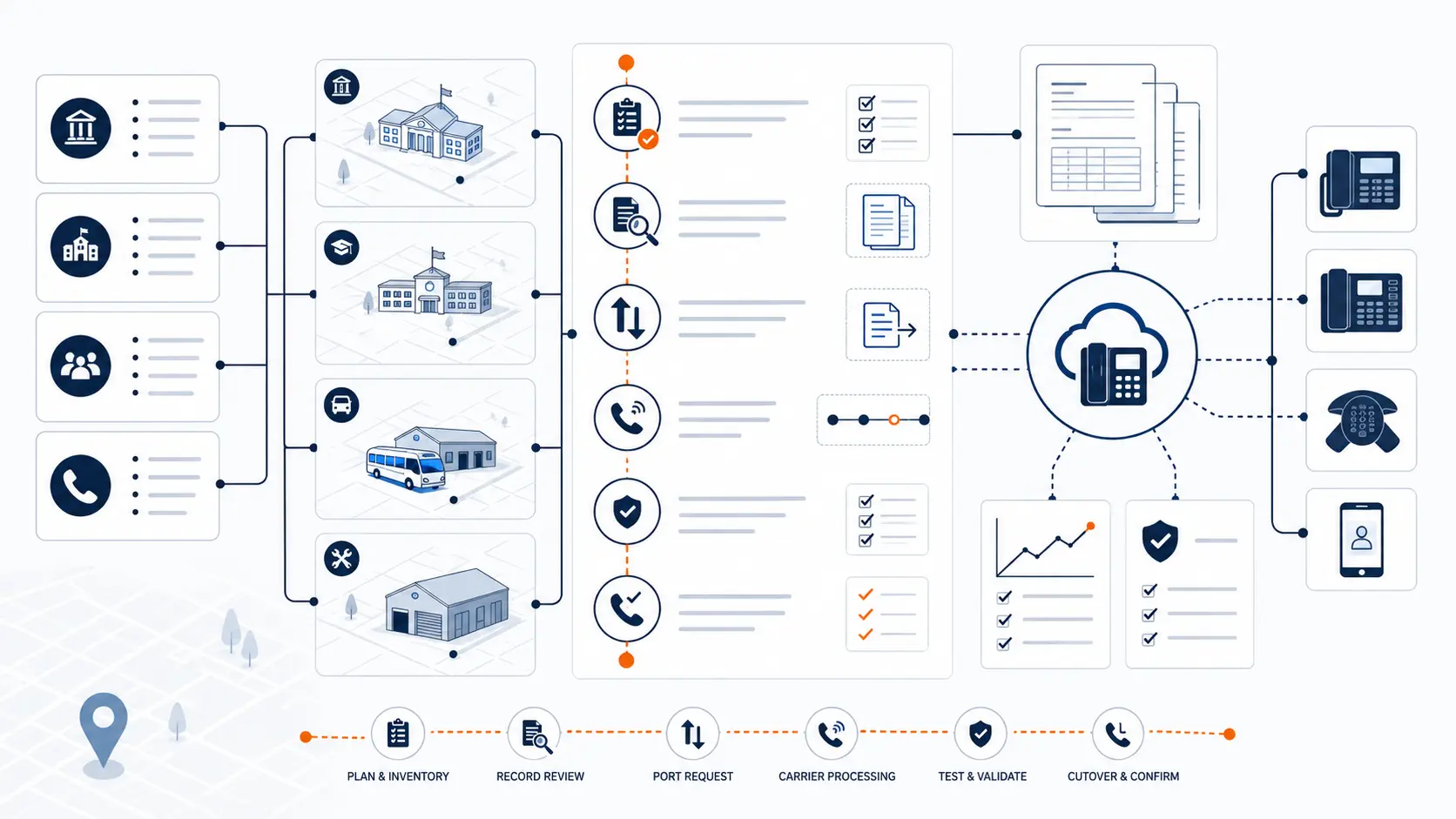
Analog line replacement and number porting
Some analog lines may have numbers that need to be ported into the new phone system. Others may not need to move. Some may be tied to specialty services that should not be touched without vendor coordination.
Before porting, districts should separate numbers into groups:
| Number type | Example | Planning note |
|---|---|---|
| Main school numbers | Front office or campus numbers | Usually part of phone system migration |
| Department numbers | Transportation, maintenance, athletics | May need routing review |
| DID numbers | Staff or office direct numbers | Confirm active use before porting |
| Fax numbers | Office or department fax | Review whether fax is still needed |
| Alarm or elevator numbers | Specialty monitored devices | Do not port casually |
| Unknown numbers | Numbers on old carrier bills | Investigate before disconnecting |
A number porting plan should protect active service, avoid unnecessary line retention, and prevent surprise outages. Use the District Phone System Modernization Roadmap to organize porting, cutover, and post-launch review steps.
Analog lines in existing hosted VoIP installations
Analog line replacement is not only an old PBX issue. Some districts already moved to hosted VoIP but still pay for analog lines that were never cleaned up. Others may have a hosted VoIP system for staff extensions, plus old carrier services for fax, alarms, elevators, or backup lines.
This is one reason renewal review matters. A district may think it already modernized, but the phone environment may still include:
- Per-extension VoIP pricing
- Unused hosted seats
- Analog lines still billed separately
- Fax services nobody reviewed
- Specialty lines outside the support model
- Old carrier accounts nobody owns
- E911 records split between systems
- Support gaps between the hosted provider, carrier, and specialty vendors
If the district is paying by extension and still paying for unreviewed analog lines, the installation should be questioned. The issue is not whether the system is technically VoIP. The issue is whether the district is paying for the right model, maintaining the right records, and using a system that fits school operations.
For more on this topic, see Hosted VoIP for Schools: What Districts Should Review Before Renewal if that guide is live.
Questions to ask before replacing analog lines
District teams should ask practical questions before making changes:
- What does this line support?
- Where is the device physically located?
- Who owns the device or system attached to the line?
- Is the line used for emergency calling?
- Is the line monitored by a third party?
- Is the line tied to an alarm, elevator, gate, or safety system?
- Is the service address accurate?
- Is the number supposed to port to the new phone system?
- Can the service be replaced safely?
- Who needs to test it after cutover?
- What happens if the replacement fails?
- Can the district cancel the old service after testing?
These questions prevent the project from becoming a guessing exercise.
How K12 Phone Systems reviews analog line replacement
An analog line review is part of understanding the district’s full phone environment. K12 Phone Systems can help review the phone bill, known numbers, current phone setup, campus list, and system notes so the district can identify what needs to be investigated before replacement.
A review may help identify:
- Lines that appear to be ordinary voice service
- Numbers that may need to be ported
- Lines that require further investigation
- Services that may involve specialty vendors
- Potential billing cleanup opportunities
- E911 and location planning questions
- Cutover considerations
- Items to discuss with facilities, safety, or finance
The review does not replace legal, alarm, elevator, or public safety advice. It helps the district organize phone system and carrier questions before moving forward.
Related planning resources
- District Phone System Review Checklist
- District Phone System Modernization Roadmap
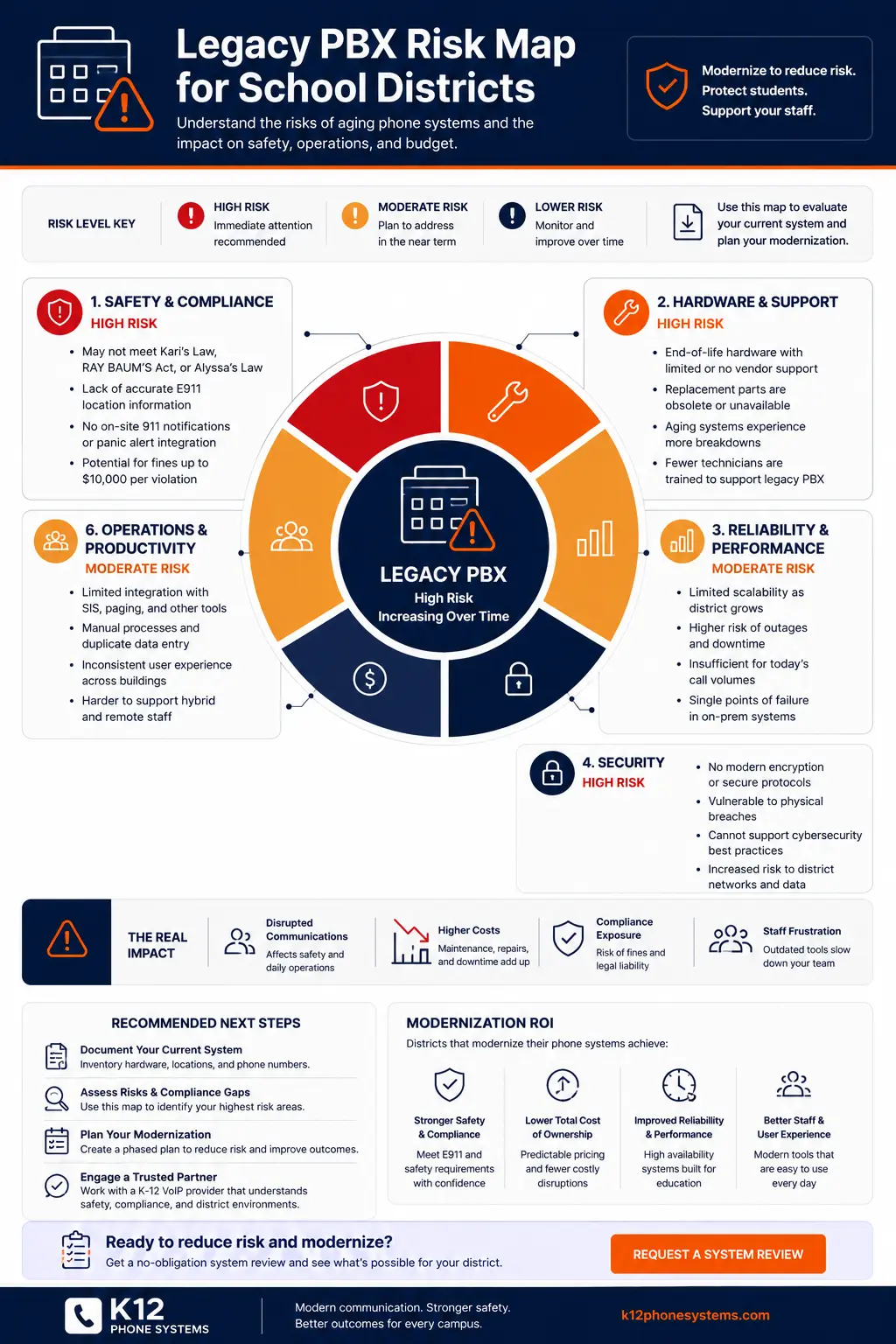
- Legacy PBX Risk Map for School Districts
- K-12 E911 Readiness Checklist
- School Phone Systems
- PBX Replacement for Schools
- Cloud Phone Systems for Schools
Frequently asked questions
What is analog line replacement for schools?
Analog line replacement is the process of identifying traditional carrier phone lines and determining whether they should be replaced, retained, converted, or handled by a specialty vendor during a school phone system project.
Should every analog line be replaced with VoIP?
No. Some analog voice lines may move into a hosted phone system, but specialty lines for alarms, elevators, gates, or other systems may require vendor coordination and separate review.
Why do schools still have analog lines?
Many lines were installed over time for fax machines, alarm panels, elevator phones, gates, remote buildings, and backup uses. They may remain on bills long after the main phone system changes.
Can analog lines affect E911 readiness?
Yes. If a line is tied to emergency calling or a fixed device, its location records and service address should be reviewed for accuracy.
What should districts review before canceling analog lines?
Districts should confirm the line’s purpose, physical location, connected device, department owner, vendor owner, service address, emergency use, and testing requirements.
Do hosted VoIP districts still need analog line review?
Yes. Some districts have hosted VoIP for staff calling but still pay for analog services tied to fax, alarms, elevators, gates, or old carrier accounts.
Can analog line review reduce telecom costs?
It can identify duplicate, unused, or misclassified services, but districts should verify each line before canceling it. Cost reduction should not come at the expense of safety or required specialty service.
What should we send before requesting an analog line review?
Send current phone bills, known carrier accounts, a campus list, phone system notes, vendor proposals, or any list of lines tied to fax, alarms, elevators, gates, or specialty systems.
References
- FCC Multi-line Telephone Systems 911 Direct Dialing, Notification, and Dispatchable Location Requirements
- FCC Dispatchable Location for 911 Calls
- National 911 Program: FAQ About Calling 911
Ready to review analog lines before replacing your phone system?
Share your current phone bill, campus list, phone setup, or vendor proposal. We will help identify carrier services, analog line questions, migration considerations, and practical next steps before replacement.